A cold hot tub, despite running, often points to a failed heater element. This includes labor, service call fees, and the part itself. If you decide to replace the hot tub heating element yourself, expect to pay $50 to $200 for the part alone.
Understanding whether to attempt a DIY repair or call a professional depends on your comfort with electrical work, your hot tub's specific setup, and the overall age of your spa. This guide breaks down the expenses for both approaches, helping you make an informed decision.
Diagnosing a Failed Hot Tub Heater Element
Before considering replacement costs, confirm that the heater element is indeed the problem. Many hot tub heating issues stem from simpler causes, such as tripped breakers, low water flow, or incorrect settings. A common sign of a failing element is the hot tub circulating water but not reaching its set temperature, or a complete lack of heat altogether. Sometimes, a visual inspection of the element itself, if accessible, might reveal corrosion or burn marks, indicating a physical failure.
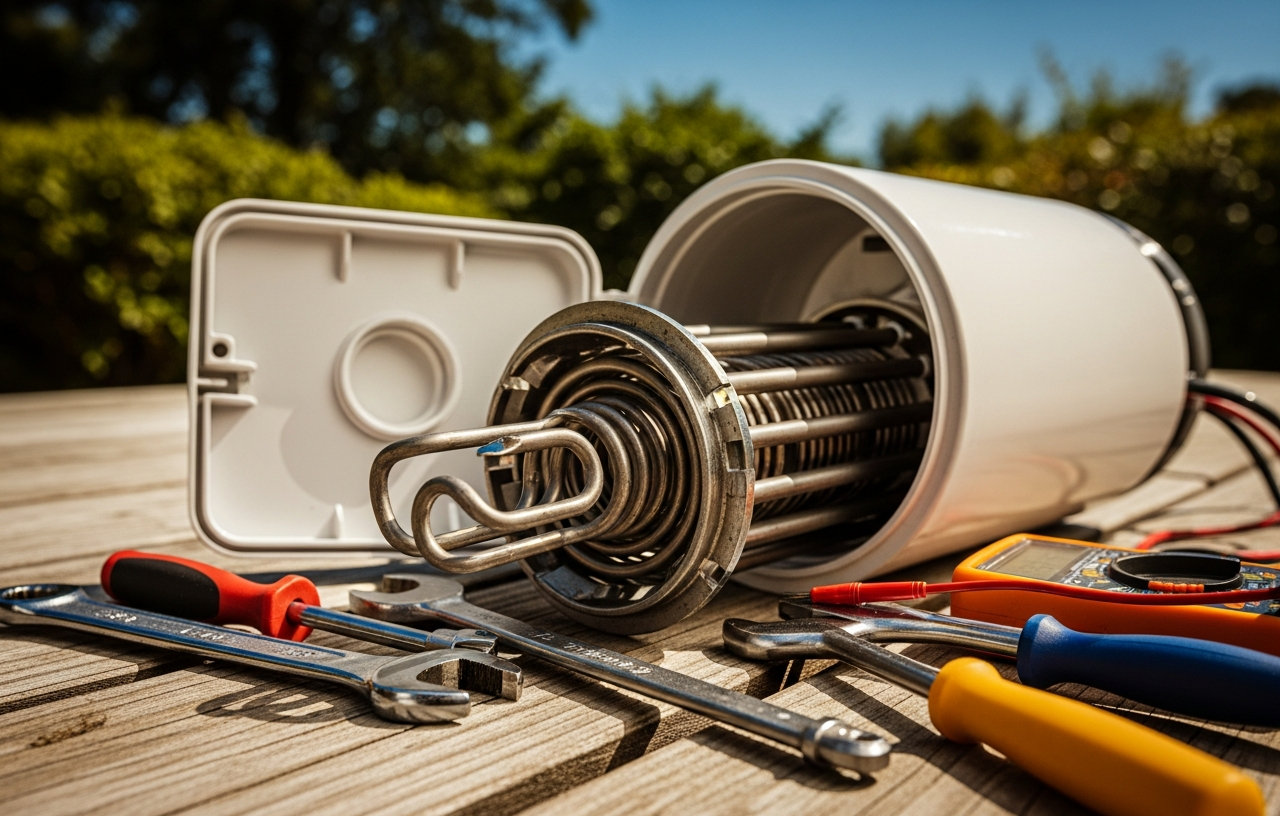
You can test the element's continuity with a multimeter. After disconnecting power to the hot tub, remove the access panel to the spa pack. Locate the heater tube, which houses the element. Disconnect the wires leading to the element and set your multimeter to the ohms setting. Place the probes on the two terminals of the element. A reading of infinity or an open circuit indicates a faulty element. A good element will show a resistance reading between 9 and 12 ohms for a 4kW heater, or around 3.5 ohms for a 5.5kW heater, depending on its wattage.
For a more detailed troubleshooting process that covers other potential problems, review our article on Hot Tub Not Heating: Causes & Quick Fixes. This step is critical because replacing a working element will not solve your heating problem and will simply waste money.
DIY Hot Tub Heating Element Replacement Cost
Replacing a hot tub heater element yourself can save you a significant amount on labor and service fees. The primary expense will be the replacement part.
The Cost of the Heater Element Itself
The price of a new hot tub heating element varies based on the wattage, brand, and whether it comes as part of a complete heater assembly. Most elements are rated between 4kW and 5.5kW, which are standard for residential hot tubs.
- Basic Replacement Element: For standard 4kW or 5.5kW elements, expect to pay $50 to $120. These are often generic replacements compatible with many spa packs from various manufacturers.
- Brand-Specific or High-Wattage Element: Some proprietary elements or those for larger, higher-end spas can cost $120 to $200. Brands like Balboa, Gecko, and Laing may have slightly higher prices for their specific components, reflecting their design and compatibility.
- Complete Heater Assembly (if needed): In some cases, the entire heater housing, or "heater tube," may be corroded or damaged beyond repair. If you need to replace the entire assembly, which includes the element, pressure switch, and housing, costs can range from $150 to $400. However, most element replacements do not require replacing the entire assembly.
You can find these parts online from various spa supply retailers or sometimes at specialty pool and hot tub stores. Ordering online often provides a wider selection and potentially better prices, though local stores offer immediate availability and expert advice.
Tools and Supplies for DIY Replacement
Replacing a hot tub heater element does not require many specialized tools. Most homeowners will already have what they need for this type of repair.
- Multimeter: Essential for diagnosis, if you do not already own one, a basic model costs $20 to $40. This tool is useful for many other electrical diagnostics.
- Screwdrivers: Phillips and flathead screwdrivers are typically sufficient for removing access panels and terminal covers.
- Adjustable Wrench or Socket Set: Necessary for loosening and tightening the nuts that secure the element within its housing.
- Pliers: Helpful for gripping wires or stubborn nuts, and for managing hose clamps if any plumbing needs adjustment.
- Sealant Tape (Teflon Tape): About $5, used to ensure a watertight seal on plumbing fittings if you disconnect any pipes during the process.
- New Gaskets/O-rings: Often included with the new element. If not, they might cost $5 to $15 and are critical for preventing leaks.
Your total additional tool cost, if you need to buy a multimeter, will likely be under $50. This is a one-time investment that can assist with many future electrical troubleshooting tasks around the house, making it a valuable addition to your toolkit.
When DIY Makes Financial Sense
DIY replacement of a hot tub heater element makes solid financial sense if you are comfortable working with electricity and basic plumbing. The savings on labor, which can be $150 to $300, are substantial. It is a repair that many moderately skilled homeowners can accomplish in 1 to 2 hours. You must always disconnect power to the hot tub at the main breaker before starting any work. Drain the hot tub before replacing the element to prevent water spills and electrical hazards. This repair requires careful attention to detail but is generally considered manageable for a DIY enthusiast.
Professional Hot Tub Heater Element Replacement Cost
Hiring a professional hot tub technician provides expertise and reduces the risk of incorrect installation or further damage. The total cost will include a service call fee, labor, and the part itself.
Service Call Fees
Most hot tub service companies charge a flat fee to send a technician to your home. This fee usually covers the technician's travel and initial diagnostic time, typically 30 minutes to an hour. Some companies might waive or reduce this fee if you proceed with the repair directly after the diagnosis.
Labor Costs for Replacement
After the initial diagnosis, the technician will charge for their time to perform the actual replacement. Hourly rates for hot tub technicians typically fall between $75 and $125 per hour. Replacing a heater element usually takes 1 to 2 hours, assuming easy access and no complications.
- Typical Labor Cost: Expect to pay $75 to $250 for labor for the replacement itself.
- Complex Installations: If the hot tub is difficult to access, or if corroded parts make removal challenging, labor time could increase, pushing costs higher. For example, if the hot tub is sunk into a deck, access might take longer, adding to the labor.
Professional Part Markup
Technicians often source parts directly from suppliers and may apply a markup on the component price. This markup covers their time in acquiring the part, inventory costs, and the convenience they offer by having the right part on hand. While a DIY element might cost $50-$120, a professional could charge $80-$180 for the same part. For higher-end elements or complete assemblies, the markup will be proportional to the initial part cost.
Total Professional Cost Breakdown
- Service Call: $80 - $150
- Labor (1-2 hours): $75 - $250
- Heater Element: $80 - $180 (with markup)
- Total Estimated Cost: $235 - $580
These figures are estimates. Your actual cost may vary based on your geographic location, the specific hot tub model, and the technician's rates. It is always wise to get a detailed quote before authorizing any work to avoid surprises.
When Professional Repair is Recommended
Calling a professional is recommended if you are uncomfortable working with electrical components or plumbing. Hot tubs involve high voltage, and improper wiring can be dangerous. A professional also brings experience in diagnosing subtle issues that might mimic a heater element failure, saving you time and potential misdiagnosis. If your hot tub is still under warranty, performing a DIY repair might void it, making professional service the better choice. Professionals can also handle unexpected complications or discover secondary issues more efficiently.
Factors That Influence the Hot Tub Heating Element Replacement Cost
Several variables can affect the final price tag for your hot tub heating element replacement.
Hot Tub Type and Brand
Different hot tub manufacturers use varying heater designs. Some proprietary systems might require specific elements that are more expensive or harder to find. Brands like Jacuzzi, Hot Spring, or Sundance often have custom-fit components designed for their unique systems. Less common brands or older models might present challenges in sourcing parts, potentially increasing costs due to special orders or longer wait times for delivery.
Geographic Location
Labor rates for hot tub technicians vary significantly by region. Metropolitan areas and regions with a higher cost of living generally have higher service call and hourly labor rates compared to rural areas. For example, a technician in a major city might charge $125 per hour, while one in a smaller town might charge $80 per hour.
Accessibility of the Heater
The ease of access to the hot tub's spa pack and heater assembly affects labor time. If the hot tub is built into a deck or surrounded by landscaping that makes it difficult to reach, a technician may charge more for the additional time required to access the components. This can add 30 minutes to an hour to the repair time, increasing labor costs by $35 to $125.
Additional Problems Discovered
During the diagnosis or replacement of the heater element, a technician might uncover other issues. For example, a corroded pressure switch, a faulty high-limit sensor, or a problem with the circulation pump could all contribute to heating issues or be related to the element's failure. Addressing these additional problems will add to the overall cost. A non-priming pump, for instance, could prevent water flow to the heater. You can learn more about pump issues in our article, Pool Pump Not Priming? Here's How to Fix It. Each additional repair will incur extra parts and labor charges.
Maintaining Your Hot Tub Heater Element
Proper hot tub maintenance can extend the life of your heater element and prevent premature failure. The most common culprit for heater element failure is poor water chemistry. Imbalanced pH or high calcium hardness can lead to scale buildup on the element, reducing its efficiency and causing it to burn out prematurely.
- Maintain Proper Water Chemistry: Regularly test and adjust your hot tub's pH, alkalinity, and calcium hardness. Keep pH between 7.4 and 7.6. For guidance on adjusting pH, see our article on How to Lower Pool pH: step by step Guide for Clear Water.
- Keep Water Flowing: Make sure your circulation pump operates correctly and filters are clean. Low water flow can cause the heater to overheat and fail, as it cannot dissipate heat effectively.
- Clean Filters Regularly: Clogged filters restrict water flow, putting strain on the heater and pump. Rinse or clean your filters according to manufacturer recommendations to maintain optimal flow.
- Drain and Refill: Drain and refill your hot tub every 3-4 months to prevent chemical buildup and refresh the water. This also helps in diluting total dissolved solids that can impact water quality and equipment.
A well maintained hot tub provides years of enjoyment without unexpected costs.