
GLACIER FRESH Garden Hose Filter Pre-Filter for Pool & Spa 2-Pack
- GLACIER FRESH garden hose filter contains coconut shell-activated carbon particles, which can effectively.
- GLACIER FRESH activated carbon garden hose filter is up to 8,000 gallons, which can effectively remove.
- GLACIER FRESH Garden hose filter available for any standard plumbing and suitable for swimming pool water.
- Our hose filter is easy to install without any tools. Just connect the hose to the garden hose pre-filter.

POOLPURE Garden Hose End Pre Filter for Pool, Hot Tub, Spa, 1Pack
- 🏊 Proud Partner of Florida Gators Swimming & Diving: PoolPure’s official partnership with the Florida.
- 📺Proven by Athletes & Media Tested in real training environments and featuring Olympic swimmer Rhyan.
- The filter fits any standard 3/4" garden hose thread. Great for filling above-ground pools, kiddie pools.
- POOLPURE water filter reduces many harmful substances from your water including Chlorine, Bad Taste, Odor.
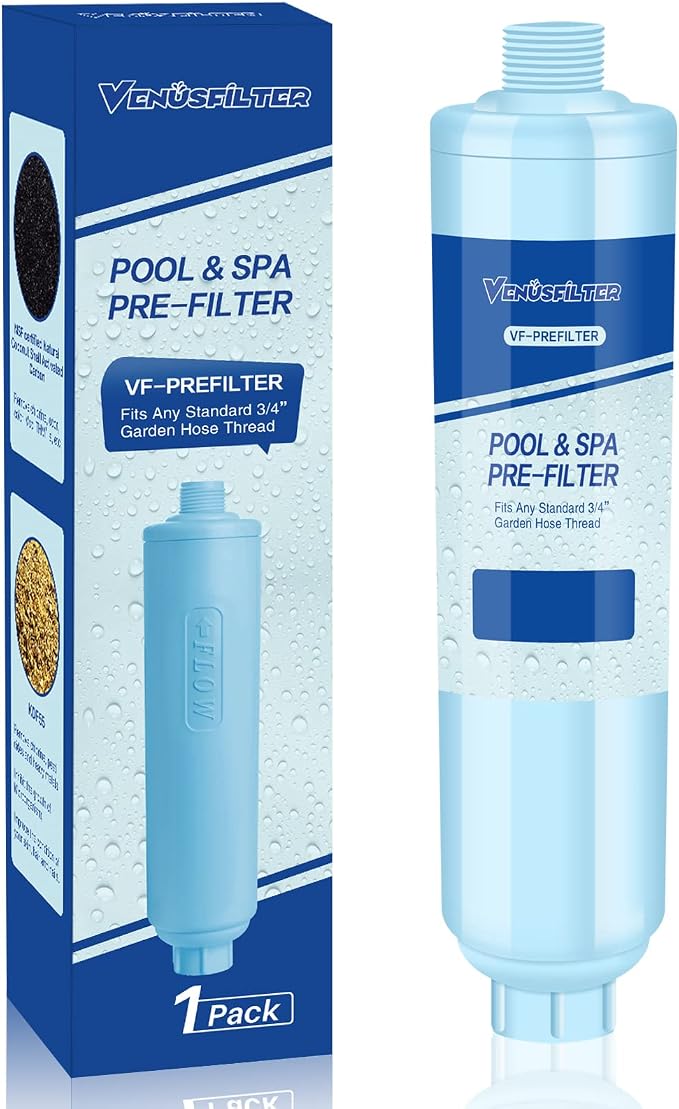
Garden Hose Filter for Filling Hot Tub, Pool, Spa, Greatly Reduces Sediment, Chlorine, Heavy Metals and Odors, Standard 3/4"
- [Filter More Efficiently] This garden hose filter uses natural coconut shell activated carbon material.
- [NSF Certified] This garden hose end pre-filter is NSF certified and uses Kinetic Degradation Fluxion.
- [Multiple Uses] The hose filter for filling the hot tub fits any standard 3/4" garden hose thread. Filling.
- [Long Lasted] This garden hose pre-filter has passed standard testing without any cracking and can filter.
A hot tub with a water level below the skimmer opening usually means one of three things: normal evaporation, a leak in the filter area, or a more serious plumbing or shell leak. Addressing a low water level quickly prevents damage to your pump and heater. This guide will help you identify the cause and return your hot tub to its optimal operating level.
Why a Low Water Level Harms Your Hot Tub
Operating a hot tub with insufficient water can lead to several problems. The most immediate concern is air entering the circulation system through the skimmer. This can cause your pump to lose its prime, leading to cavitation and potential burnout. If your pool pump is not priming correctly, a low water level is a common culprit.
Beyond pump damage, a low water level can also affect your heating system. Heaters often have flow sensors that prevent operation when water flow is too low, protecting against dry firing. This means your hot tub may not heat properly, or at all. Finally, less water means chemical concentrations become unstable. If your water level is consistently low, you might find your hot tub water cloudy or struggle to maintain balanced pH and sanitizer levels.
Cause 1: Evaporation (The Most Common Culprit)
Evaporation is the most frequent reason for a hot tub's water level to drop. Factors like high water temperature, frequent use, strong winds, and leaving the cover off contribute significantly to water loss. Even with a good cover, some evaporation will occur.
How to Diagnose Evaporation
- Mark the Water Level: Use a piece of electrical tape or a grease pencil to mark the current water level on the inside of the hot tub shell.
- Observe for 24-48 Hours: Make sure the hot tub is not in use during this period. Keep the cover on.
- Check the Drop: If the water level drops by less than 1/4 inch per day (about 2 inches per week), it is likely normal evaporation. If it drops more significantly, you probably have a leak.
How to Fix Evaporation (Refilling Your Hot Tub)
Refilling your hot tub is a simple process. Always make sure to turn off the hot tub's power at the breaker before adding water. This prevents the heater or pump from activating without sufficient water, which can cause damage.
- Power Off: Flip the circuit breaker for your hot tub to the OFF position.
- Attach Filter: Connect a garden hose pre-filter to your garden hose. This filter removes impurities from your tap water before it enters the hot tub.
- Start Refilling: Place the end of the hose into the hot tub's filter compartment or skimmer opening. This helps prevent airlocks in the plumbing lines.
- Monitor Level: Fill the hot tub to the manufacturer's recommended level, typically halfway up the skimmer opening or to a marked waterline.
- Restore Power: Once filled, remove the hose and restore power to your hot tub.
Using a garden hose pre-filter is highly recommended. Tap water often contains chlorine, heavy metals, sediment, and other impurities that can throw off your hot tub's chemical balance or even stain the shell. A good pre-filter reduces these contaminants.
TOP PICK: GLACIER FRESH Garden Hose Filter Pre-Filter for Pool & Spa 2-Pack
The GLACIER FRESH garden hose filter contains coconut shell-activated carbon particles, which can effectively reduce chlorine, odors, and sediment. This filter is rated for up to 8,000 gallons, making it suitable for multiple hot tub fills. It fits any standard plumbing and is ideal for both pools and spas.
Option 2: POOLPURE Garden Hose End Pre Filter for Pool, Hot Tub, Spa, 1Pack
POOLPURE's filter is a proud partner of Florida Gators Swimming & Diving, proven by athletes and media tested in real training environments. It fits any standard 3/4" garden hose thread, great for filling various water vessels including hot tubs.
Option 3: Garden Hose Filter for Filling Hot Tub, Pool, Spa, Greatly Reduces Sediment, Chlorine, Heavy Metals and Odors, Standard 3/4"
This garden hose filter uses natural coconut shell activated carbon material for efficient filtering. It is NSF certified and uses Kinetic Degradation Fluxion (KDF) to reduce sediment, chlorine, heavy metals, and odors. It also fits any standard 3/4" garden hose thread.
Maintaining Water Chemistry After Refilling
After refilling, you will need to rebalance your hot tub's water chemistry. The fresh water will dilute existing chemicals. Test your water immediately for alkalinity, pH, and sanitizer levels. You might find your hot tub pH too low, or your bromine level too low in hot tub, requiring adjustments.
Add the necessary chemicals slowly, testing after each addition, until all levels are within the recommended ranges. This includes ensuring your hot tub stabilizer is not too low, which protects your sanitizer from breaking down quickly.
Cause 2: Filter Housing or Skimmer Area Leak
If your water loss is greater than expected for evaporation, the next most likely culprit is a leak around the filter housing, pump, or skimmer. These areas are under constant water pressure and contain several seals and connections that can degrade over time.
How to Diagnose a Filter Area Leak
- Visual Inspection: With the power off, carefully inspect the area around your hot tub's filter housing, pump, and heater. Look for any visible drips, puddles, or water stains on the equipment pad or surrounding surfaces. Pay close attention to unions, O-rings, and gaskets.
- Dry Towel Test: Place dry paper towels around all connections and under the pump. Run the hot tub for a short period (15-30 minutes) and then check the towels for moisture.
- Dye Test (Optional but Effective): With the pump off, add a few drops of food coloring or a leak detection dye near suspected leak points, such as around the skimmer faceplate, jets, or the filter housing. Watch to see if the dye is drawn into any cracks or openings.
How to Fix a Filter Area Leak
The fix depends on the source of the leak:
- Loose Connections: Often, unions or fittings can simply be tightened with a wrench. Do not overtighten, as this can crack PVC components.
- Worn O-Rings or Gaskets: If tightening does not stop the leak, the O-ring or gasket in the fitting may be worn or cracked. You will need to drain the hot tub below the level of the leak, disassemble the connection, replace the O-ring or gasket, and reassemble. Always use a silicone-based lubricant on new O-rings for a better seal and easier installation.
- Cracked PVC: If you find a crack in a PVC pipe or fitting, you may be able to repair it with a PVC patch kit or by replacing the section of pipe. This often requires cutting out the damaged section and cementing in a new piece.
Cost of Repair: Replacing O-rings or tightening connections is a low-cost DIY fix, usually only the price of the part (around $5-$20). If you need a professional to diagnose and fix a filter area leak, expect to pay $80-$150 for a service call, plus $50-$200 for parts and labor, depending on the complexity.
Cause 3: Plumbing or Shell Leak (More Serious)
If you have ruled out evaporation and obvious leaks around the equipment, the problem might be a leak within the hot tub's internal plumbing or the shell itself. These leaks are less common but more challenging to locate and repair.
How to Diagnose a Plumbing or Shell Leak
- Isolate Components: If your hot tub has diverter valves, try closing them one by one to isolate different plumbing lines. If the water level drop slows or stops when a particular line is closed, the leak is likely in that section.
- Dye Test (Jets/Lights): With the pump off, use a leak detection dye around each jet nozzle, the hot tub lights, and any other penetrations in the shell. Watch if the dye is drawn into any of these areas.
- Drain and Inspect: If the leak persists, you may need to drain the hot tub completely. Once drained, carefully inspect the entire interior surface of the shell for cracks, especially around jets and suction fittings. Look underneath the hot tub if possible, though this often requires professional help to lift the unit.
- Pressure Test (Professional): A professional technician can perform a pressure test on the plumbing lines. This involves isolating sections of plumbing and pressurizing them with air to pinpoint the exact location of a hidden leak.
How to Fix a Plumbing or Shell Leak
Fixing these types of leaks can be complex:
- Shell Cracks: Small surface cracks in the acrylic shell can sometimes be repaired with a specialized epoxy or fiberglass repair kit designed for hot tubs. Larger cracks or structural damage may require professional fiberglass repair or even shell replacement, which is a significant undertaking.
- Internal Plumbing Leaks: Leaks in the flexible or rigid PVC plumbing lines often require accessing the plumbing underneath the hot tub's cabinet. This can involve removing side panels and potentially cutting into spray foam insulation. Repairs typically involve cutting out the damaged section of pipe and replacing it with new PVC using appropriate couplings and PVC cement.
Cost of Repair: DIY repairs for minor shell cracks might cost $30-$100 for materials. For internal plumbing or significant shell repairs, professional help is almost always necessary. A technician's service call will be $80-$150. Labor and parts for a hidden leak repair can range from $300 to over $1,000, depending on accessibility and the extent of the damage. This often involves cutting away foam insulation, which adds to the labor time.
When to Call a Professional
While many hot tub water level issues can be resolved by owners, some situations warrant professional intervention. You should call a professional if:
- You suspect a leak but cannot locate it after following the diagnostic steps.
- The leak is in a difficult-to-access area, such as under the hot tub or within the internal plumbing structure.
- You are uncomfortable performing the necessary repairs, especially those involving plumbing or shell patching.
- The water loss is significant and rapid, indicating a major leak.
A hot tub technician has specialized tools and experience to quickly diagnose and repair complex leaks, saving you time and preventing further damage.
Final Thoughts
Addressing a low hot tub water level promptly is important for the longevity and performance of your spa. By systematically checking for evaporation, filter area leaks, and then more serious plumbing issues, you can often pinpoint the problem yourself. Regular hot tub maintenance, including keeping your cover in good condition and routinely checking water levels, helps prevent these issues. Remember to always turn off the power before performing any work on your hot tub, and use a pre-filter when refilling to maintain optimal water chemistry.
GLACIER FRESH Garden Hose Filter Pre-Filter for Pool & Spa 2-Pack
- GLACIER FRESH garden hose filter contains coconut shell-activated carbon particles, which can effectively.
- GLACIER FRESH activated carbon garden hose filter is up to 8,000 gallons, which can effectively remove.
- GLACIER FRESH Garden hose filter available for any standard plumbing and suitable for swimming pool water.
- Our hose filter is easy to install without any tools. Just connect the hose to the garden hose pre-filter.
POOLPURE Garden Hose End Pre Filter for Pool, Hot Tub, Spa, 1Pack
- 🏊 Proud Partner of Florida Gators Swimming & Diving: PoolPure’s official partnership with the Florida.
- 📺Proven by Athletes & Media Tested in real training environments and featuring Olympic swimmer Rhyan.
- The filter fits any standard 3/4" garden hose thread. Great for filling above-ground pools, kiddie pools.
- POOLPURE water filter reduces many harmful substances from your water including Chlorine, Bad Taste, Odor.
Garden Hose Filter for Filling Hot Tub, Pool, Spa, Greatly Reduces Sediment, Chlorine, Heavy Metals and Odors, Standard 3/4"
- [Filter More Efficiently] This garden hose filter uses natural coconut shell activated carbon material.
- [NSF Certified] This garden hose end pre-filter is NSF certified and uses Kinetic Degradation Fluxion.
- [Multiple Uses] The hose filter for filling the hot tub fits any standard 3/4" garden hose thread. Filling.
- [Long Lasted] This garden hose pre-filter has passed standard testing without any cracking and can filter.