
POOLACC Pool Covers for Above Ground Pools - 24 ft Round Winter Pool Cover, Extra Durable Cold- and UV-Resistant heavy duty
- Superior Zinc-Alloy Winch: Upgraded from aluminum, our zinc-alloy winch offers superior strength and.
- heavy duty Material: Constructed with a robust 185 GSM density and 14×14 scrim matrix, this cover resists.
- UV & Extreme Temperature Protection: The LDPE-coated surface and black underside block UV rays. Withstands.
- Secure Fit with Steel Cable & Reinforced Grommets: Equipped with a steel-core cable and reinforced.

Winter Block 18’ ft. Round Pool Winter Cover for Above Ground Pools - 8-Year Warranty, Cold and UV Resistant, Weatherproof and
- PREMIUM WINTER POOL COVER to Thicker and more durable than the regular winter pool covers, this cover will.
- EASY TO INSTALL to This lightweight, yet durable winterizing pool cover is easy to install. It comes with.
- This aboveground pool winter cover is treated for resistance to damaging sunrays. It’s made of premium.
- FITS 18’ ROUND POOL to This Winter Block Winter Pool Cover measures 21’ in diameter to fit a 18’ round pool.

Robelle 24 ft Heavy Duty Blue Winter Pool Cover for Above Ground Pools, 4 ft Overlap (28 ft Cover Size), Solid 8 x 8 Scrim, 2.36
- Heavy Duty winter pool cover for 24 ft. round pools. This pool cover has a 4 foot overlap, which is the.
- This Heavy Duty pool cover is constructed with heavy duty polyethylene that weighs 2.36 ounces per square.
- With over 50 years of experience, Robelle has designed this Heavy Duty winter pool cover with an.
- This is a solid winter pool cover that will not allow water to pass through. More pool owners have trusted.
Replacing an above ground pool liner can cost upwards of $500 to $1,500, a significant expense often caused by improper winterization. Neglecting proper winter care for your above ground pool liner can lead to cracking, stretching, or staining, making spring opening a difficult task. Preparing your pool for the colder months protects your investment and simplifies the process of getting it ready for swimming in 2027.
This guide provides a step by step approach to winterizing your above ground pool liner, focusing on practices that extend its lifespan and maintain its condition. Following these instructions will safeguard your pool against the harsh effects of freezing temperatures, ice expansion, and prolonged exposure to debris.
Why Winterizing Your Above Ground Pool Liner Matters
The primary reason to properly winterize your above ground pool is to protect the liner. Liners are susceptible to damage from ice formation. As water freezes, it expands. This expansion can push against the liner walls, causing stretching, tears, or seam separation. Additionally, leaving stagnant, untreated water in the pool over winter can lead to severe algae growth and staining, which becomes very difficult to remove once established.
Proper winterization also protects your pool equipment, such as pumps, filters, and heaters, from freezing and cracking. It reduces the amount of work required to open your pool in the spring, saving you time and money on chemicals and cleaning supplies. A well-winterized pool will typically have clearer water and a more intact liner when temperatures rise again.
Tools and Materials Required
Gathering all necessary tools and materials before you begin will make the winterization process smoother and more efficient. Expect to spend approximately 6-10 hours completing all steps, spread over a few days for water chemistry adjustments.
- Pool brush, vacuum, and skimmer net
- Water test kit or test strips
- Pool chemicals: pH increaser/decreaser, alkalinity increaser, calcium hardness increaser, chlorine shock, winterizing algaecide, winterizing stain inhibitor
- Submersible pump (for lowering water level)
- Winterizing plugs for skimmer and return jets
- Air pillow (optional, but highly recommended)
- Above ground winter pool cover
- Cover clips, cable, and winch (often included with covers)
- Eye protection and chemical-resistant gloves
- Shop vacuum or air compressor (for blowing out lines)
Safety First
Working with pool chemicals requires caution. Always wear appropriate personal protective equipment, including eye protection and chemical-resistant gloves. Read all chemical labels carefully and follow mixing and handling instructions. Never mix different pool chemicals together, as this can create dangerous reactions. Keep chemicals out of reach of children and pets. When draining water or handling electrical equipment, make sure all power is disconnected to prevent electrical shock.
step by step Guide to Winterizing Your Above Ground Pool Liner
Step 1: Clean the Pool Thoroughly (Estimated Time: 1-2 hours)
Start by removing all debris from the pool. Use a skimmer net to clear leaves, insects, and other floating items. Brush the pool walls and floor to dislodge any attached algae or dirt. Vacuum the pool thoroughly to remove settled debris. A clean pool at closing means less work and clearer water when you open it in the spring.
Step 2: Balance Your Water Chemistry (Estimated Time: 1-2 days)
Proper water chemistry is vital, even for a closed pool. Balanced water helps prevent staining and corrosion of the liner and equipment over the winter. Use a reliable test kit or test strips to check your water. Aim for these ranges:
- pH: 7.4-7.6 (slightly lower than normal swimming range to account for winter changes) (Learn how to lower pool pH if needed)
- Total Alkalinity: 80-120 ppm
- Calcium Hardness: 180-220 ppm
Adjust chemicals as necessary, allowing time for them to circulate and for the water to rebalance before retesting. This step often takes a full day or two of testing and adjusting.
Step 3: Shock the Pool (Estimated Time: Overnight)
About 24-48 hours before you plan to close the pool, shock the water. Use a granular chlorine shock according to the manufacturer's instructions for your pool size. This high dose of chlorine will kill any remaining bacteria and algae, making sure the water is sanitized before adding winterizing chemicals. Allow the pump to run for several hours after shocking to circulate the chemical fully.
Step 4: Add Winterizing Chemicals (Estimated Time: 30 minutes)
Once the chlorine level has dropped (usually after 24 hours), add your winterizing chemicals. These typically include a winterizing algaecide and a stain inhibitor. Follow the product instructions for dosage based on your pool's volume.
Step 5: Lower the Water Level (Estimated Time: 2-4 hours)
Use a submersible pump to lower your pool's water level. For above ground pools, the water level should be lowered below the skimmer and return jet openings. This prevents water from entering and freezing in your plumbing lines. Keep an eye on the pump to avoid running it dry.
Step 6: Drain and Disconnect Equipment (Estimated Time: 1-2 hours)
Disconnect and drain all pool equipment. This includes your pump, filter, heater, and chlorinator. Make sure all water is removed from these components to prevent freezing and cracking. Store them in a dry, protected area, such as a shed or garage. For sand filters, remove the drain plug and open the air relief valve. For cartridge filters, remove and clean the cartridge before storing. You can find more information about how to set up an above ground pool pump correctly, which includes tips for disconnection.
Step 7: Plug Skimmer and Return Lines (Estimated Time: 30 minutes)
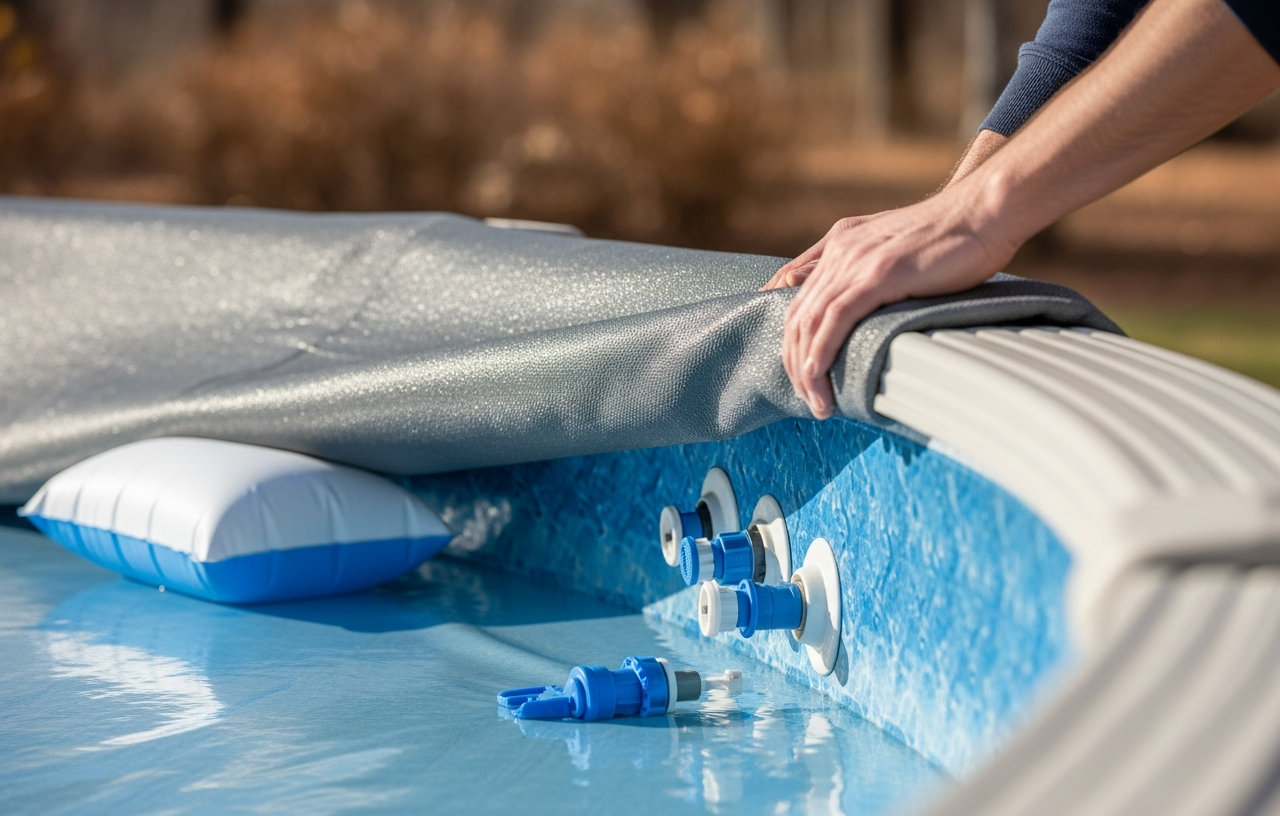
After lowering the water and disconnecting equipment, install winterizing plugs into the skimmer opening and return jet openings. These plugs create a watertight seal, preventing water from re-entering the lines and freezing. If your pool has a main drain, make sure it is also plugged or properly sealed.
Step 8: Install an Air Pillow (Optional but Recommended) (Estimated Time: 30 minutes)
An air pillow, or ice equalizer, floats on the water's surface beneath the winter cover. When ice forms, it will expand inward towards the pillow, absorbing the pressure and protecting your pool walls and liner from damage. Inflate the pillow and center it in the pool before installing the cover. Tie it off to the pool rails to keep it from floating to one side.
Step 9: Secure the Winter Cover (Estimated Time: 1-2 hours)
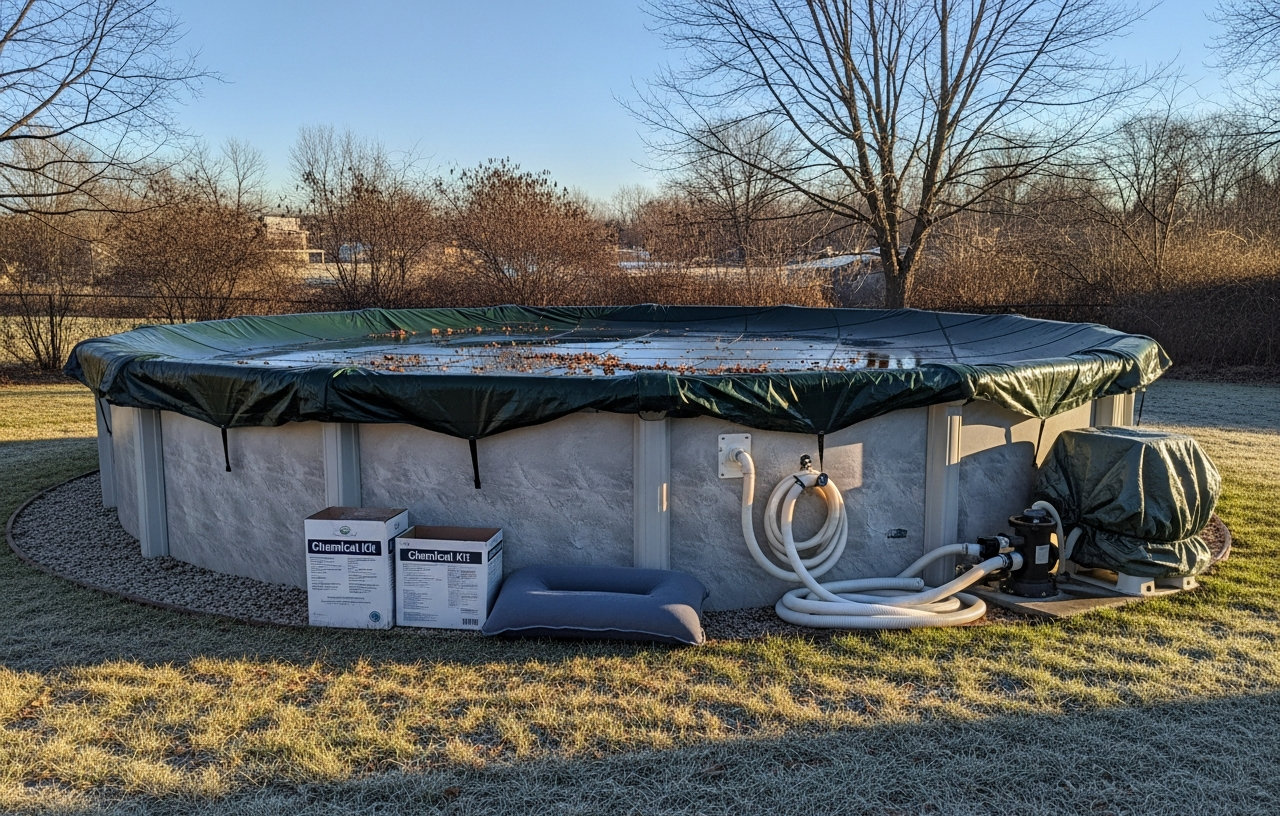
The final step is to install your winter pool cover. This cover protects the pool from leaves, debris, and sunlight, which can cause algae growth. Unfold the cover and spread it evenly over the pool, making sure it overlaps the edges by at least 1-2 feet. Use a cover cable and winch to secure it tightly around the perimeter of the pool. Cover clips can provide extra security against wind.
Choosing a durable winter cover is important for protecting your liner and maintaining water quality. Here are some options based on researched user reviews and manufacturer data:
- POOLACC Pool Covers for Above Ground Pools - 24 ft Round Winter Pool Cover: This option features a superior zinc-alloy winch, upgraded from aluminum for enhanced strength. Its heavy duty material, constructed with a robust 185 GSM density and 14x14 scrim matrix, resists tears and punctures. The LDPE-coated surface and black underside block UV rays and withstand extreme temperatures, offering excellent protection.
- Winter Block 18’ ft. Round Pool Winter Cover for Above Ground Pools: Described as thicker and more durable than regular winter covers, this premium option comes with an 8-year warranty. It is treated for resistance to damaging sunrays, made of premium cold and UV resistant material, and is weatherproof. Reviewers note its lightweight design makes it easy to install.
- Robelle 24 ft Heavy Duty Blue Winter Pool Cover for Above Ground Pools: With a 4-foot overlap (28 ft cover size), this heavy duty cover is constructed with polyethylene weighing 2.36 ounces per square yard. Robelle has designed this cover with over 50 years of experience, aiming for durability and effective winter protection.
Final Checks Before Winter
Once the cover is on, double-check that it is securely fastened all around the pool. Make sure no gaps exist where debris could enter. Periodically check the cover during winter, especially after heavy snow or wind. Remove excessive snow accumulation to prevent damage to the cover and pool structure. Make sure the air pillow remains centered if you used one.
Conclusion
Properly winterizing your above ground pool liner is a critical annual task. It extends the life of your liner, protects your equipment, and significantly reduces the effort required to open your pool in the spring. Starting the season with a well maintained liner makes all the difference.
POOLACC Pool Covers for Above Ground Pools - 24 ft Round Winter Pool Cover, Extra Durable Cold- and UV-Resistant heavy duty
- Superior Zinc-Alloy Winch: Upgraded from aluminum, our zinc-alloy winch offers superior strength and.
- heavy duty Material: Constructed with a robust 185 GSM density and 14×14 scrim matrix, this cover resists.
- UV & Extreme Temperature Protection: The LDPE-coated surface and black underside block UV rays. Withstands.
- Secure Fit with Steel Cable & Reinforced Grommets: Equipped with a steel-core cable and reinforced.
Winter Block 18’ ft. Round Pool Winter Cover for Above Ground Pools - 8-Year Warranty, Cold and UV Resistant, Weatherproof and
- PREMIUM WINTER POOL COVER to Thicker and more durable than the regular winter pool covers, this cover will.
- EASY TO INSTALL to This lightweight, yet durable winterizing pool cover is easy to install. It comes with.
- This aboveground pool winter cover is treated for resistance to damaging sunrays. It’s made of premium.
- FITS 18’ ROUND POOL to This Winter Block Winter Pool Cover measures 21’ in diameter to fit a 18’ round pool.
Robelle 24 ft Heavy Duty Blue Winter Pool Cover for Above Ground Pools, 4 ft Overlap (28 ft Cover Size), Solid 8 x 8 Scrim, 2.36
- Heavy Duty winter pool cover for 24 ft. round pools. This pool cover has a 4 foot overlap, which is the.
- This Heavy Duty pool cover is constructed with heavy duty polyethylene that weighs 2.36 ounces per square.
- With over 50 years of experience, Robelle has designed this Heavy Duty winter pool cover with an.
- This is a solid winter pool cover that will not allow water to pass through. More pool owners have trusted.