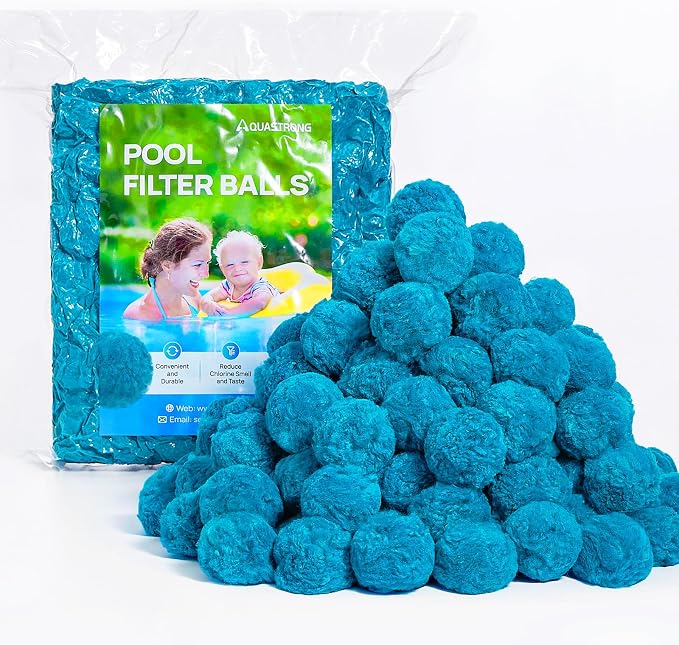
AQUASTRONG Pool Filter Balls for Sand Filter Pump, 5.5 lbs Reusable Sand Filter Balls (Replaces 180 lbs Pool Filter Sand),
- Efficient Filtration: AQUASTRONG Pool Filter Balls offer superior performance compared to traditional.
- 5.5 lbs Filter Balls Replace 180 lbs of Sand: These fiber filter balls are a lightweight and more.
- Easy to Clean & Reusable: Designed for hassle-free maintenance, these durable sand filter balls offer.
- Universally Compatible: Compatible with all filters, including sand, cartridge, and DE filters. These.

3.1 lbs Pool Filter Balls for Sand Filter, Eco-Friendly Reusable Pool Fiber Filter Balls Replace Pool Filter Sand, Pool Filter
- These fiber filter balls can perfectly replace the traditional pool filter sand, it is lighter, more.
- Pool sand filter ball is made of 100% eco-friendly polyester fiber. It not only has the advantages of.
- These fiber filter balls can filter impurities as low as 5-3 microns, ensuring that your swimming pool.
- We provide a high quality polyester fiber mesh bag for these filter balls, which you can place fliter ball.

MAQIHAN 50PCS Pool Filter Balls for Sand-Filter - Dry Filter Sand Balls,Reusable Swimming Pool Filter Media,Soft Filtration
- Efficient and Low Loss: Made from polyester fiber, our filter balls are reusable. They can be used as a.
- Superior to Traditional Filter Products: Compared to traditional filter products, our filter balls are.
- Longevity & Durability: The polyester fiber material used in our filter balls is highly durable with.
- Versatile Applications: Our filter balls play important roles in various settings such as swimming.
Murky or cloudy pool water, despite balanced chemicals, often means your filter is not doing its job. Selecting the correct pool filter is fundamental to maintaining clear, healthy swimming water. The right filter matches your pool's size, your budget, and your desired level of maintenance. Understanding the different types and their capabilities will help you make an informed decision.
Understanding Pool Filter Types
There are three main types of pool filters: sand, cartridge, and diatomaceous earth (DE). Each offers distinct advantages and disadvantages regarding filtration quality, cost, and maintenance. Knowing these differences is the first step in how to choose a pool filter.
Sand Filters
Sand filters are the oldest and most common type of pool filter. They work by pushing pool water through a tank filled with special filter sand. The sharp edges of the sand particles trap debris and impurities as water passes through. Over time, the sand's effectiveness improves slightly as a 'filter cake' of trapped particles forms, but eventually, it becomes too clogged and needs cleaning.
- Filtration Quality: Sand filters typically remove particles down to 20-40 microns. This is good for general cleanliness but may not provide crystal-clear water like other types.
- Maintenance: Maintenance involves regular backwashing, which reverses the water flow to flush trapped debris out of the sand and into a waste line. This process wastes some pool water, which may need to be replaced and rebalanced. Sand usually needs to be replaced every 5-10 years. For a step by step guide on this, see our article on How to Clean Pool Filter Sand.
- Cost: Sand filters generally have the lowest upfront cost. Replacement sand is inexpensive, costing around $25-$50 per 50-pound bag, with most filters requiring several bags.
Consider an alternative to traditional filter sand: filter balls. Products like the AQUASTRONG Pool Filter Balls for Sand Filter Pump offer superior performance. These 5.5 lbs of reusable filter balls can replace 180 lbs of traditional pool filter sand. They are designed for hassle-free maintenance and are easy to clean. Another option, the 3.1 lbs Pool Filter Balls for Sand Filter, emphasizes eco-friendliness and can filter impurities as low as 5-3 microns. The MAQIHAN 50PCS Pool Filter Balls for Sand-Filter also offers efficient, low-loss filtration using durable polyester fiber.
Cartridge Filters: How to Choose a Cartridge Pool Filter
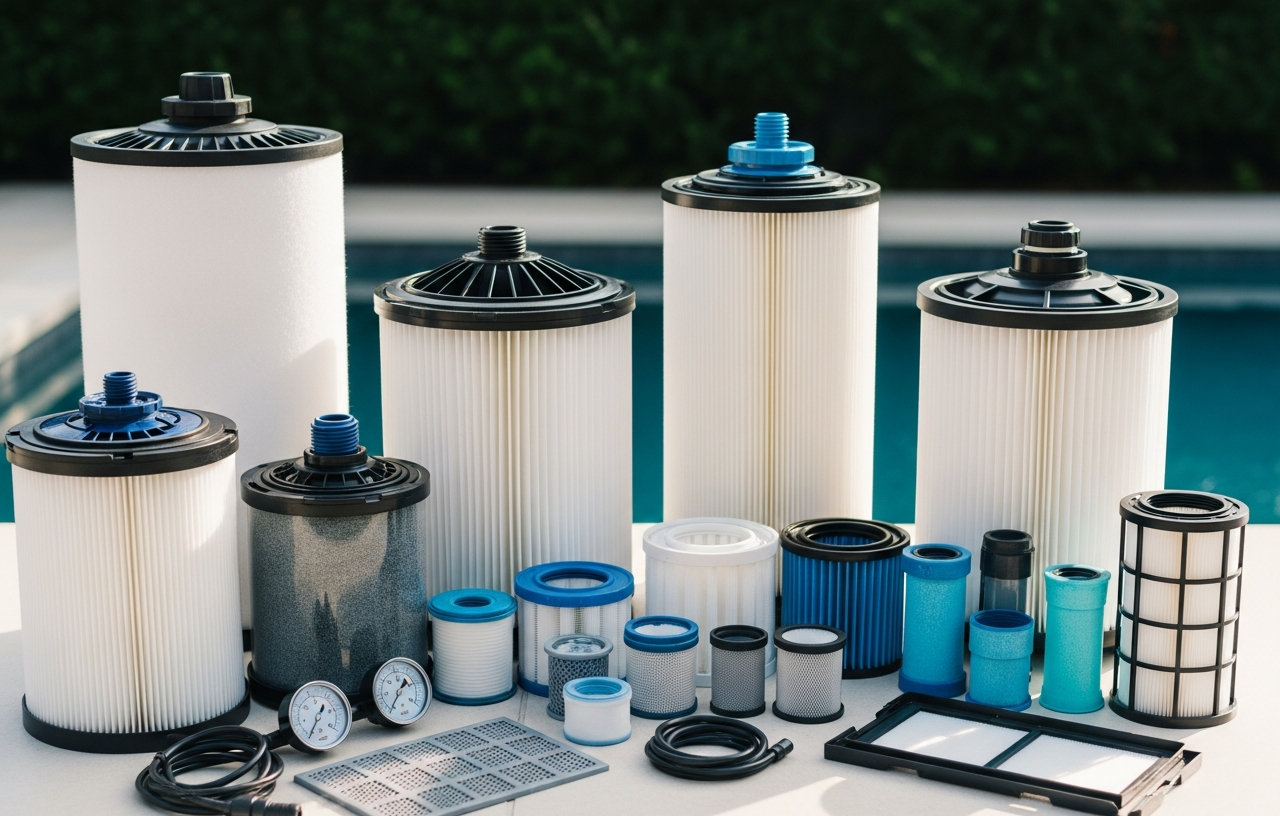
Cartridge filters use large cylindrical cartridges made of pleated fabric. Water flows into the filter tank, passes through the cartridge material, and returns to the pool. Debris collects on the outside of the pleats. When the filter gets dirty, pressure rises, indicating it's time for cleaning.
- Filtration Quality: Cartridge filters capture smaller particles than sand filters, typically 10-25 microns. This results in clearer water.
- Maintenance: Instead of backwashing, you remove the cartridges from the tank and rinse them with a garden hose. This is a manual process but does not waste pool water. Cartridges usually last 1-3 years before needing replacement, depending on use and cleaning frequency.
- Cost: The initial cost of a cartridge filter is often higher than a sand filter but lower than a DE filter. Replacement cartridges can range from $50-$200 or more, depending on the size and brand.
When you choose a cartridge pool filter, inspect the pleat count and surface area. More pleats and a larger surface area mean longer intervals between cleaning and better filtration capacity.
Diatomaceous Earth (DE) Filters
DE filters provide the finest filtration available for residential pools. They use grids coated with diatomaceous earth, a fine powder made from fossilized diatoms. The DE powder acts as a filtering agent, trapping even microscopic particles.
- Filtration Quality: DE filters can remove particles as small as 2-5 microns, delivering exceptionally clear, polished water.
- Maintenance: DE filters require backwashing, similar to sand filters, but you also need to add new DE powder to the filter after each backwash. This powder can be messy to handle and requires proper disposal, as it cannot go down a storm drain. The grids inside the filter periodically need a thorough cleaning, which can be a time consuming task.
- Cost: DE filters have the highest initial cost among the three types. The ongoing cost includes purchasing DE powder.
How to Choose a Pool Filter Size
Choosing the right size pool filter is critical for efficient operation and clear water. An undersized filter will get dirty too quickly, leading to frequent cleaning and potential strain on your pump. An oversized filter will cost more upfront but will require less frequent cleaning and potentially extend the life of your pump.
Calculate Your Pool's Volume
First, determine your pool's volume in gallons:
- Rectangular Pools: Length x Width x Average Depth x 7.5
- Round Pools: Pi (3.14) x Radius^2 x Average Depth x 7.5
Determine Turnover Rate and GPM
The filter's capacity is measured by its maximum flow rate in gallons per minute (GPM) and its effective filtration area in square feet. You want your filter to be able to turn over your entire pool's volume at least once every 8-12 hours. The maximum flow rate for your filter should ideally match or exceed your pool pump's flow rate.
To calculate the required GPM for an 8-hour turnover:
Pool Volume / 8 hours / 60 minutes = Required GPM
For example, a 20,000-gallon pool needs 20,000 / 8 / 60 = 41.67 GPM. Your filter should handle at least this flow rate. The manufacturer's specifications for filters will list their maximum GPM and filtration area. Always choose a filter with a GPM capacity that is equal to or greater than your pump's GPM.
How to Choose a Pool Pump and Filter Together
The pool pump and filter work as a system. The pump pushes water through the filter. An improperly matched pump and filter can lead to inefficiencies, poor filtration, or damage to equipment. If the pump pushes water through the filter faster than the filter can handle, it creates excessive back pressure. This can damage the filter, reduce its efficiency, and put strain on the pump. If you notice your pool filter pressure is too high, it could be a sign of a clogged filter or a mismatch with your pump.
Consider Pump Horsepower
Pump horsepower (HP) dictates its flow rate. A general rule is to aim for a pump that can turn over your pool's water in 8-10 hours. They also offer flexibility in matching your filter's capabilities. For more information on pump issues, read our guide on Pool Pump Not Priming? Here's How to Fix It.
Comparing Options: What to Watch For
When comparing different pool filter models, several factors beyond just type and size come into play.
Materials and Construction
Look for durable, corrosion-resistant materials. Filter tanks are typically made from heavy duty plastic or fiberglass. Stainless steel clamps and hardware are preferable for longevity. Check the warranty offered by the manufacturer. A longer warranty usually indicates higher confidence in the product's durability.
Valve Types
Sand and DE filters use either a top-mount or side-mount multiport valve or a push-pull (slide) valve.
- Multiport Valves: Offer multiple settings (filter, backwash, rinse, waste, recirculate, closed). They are convenient but can be a source of minor leaks over time.
- Push-Pull Valves: Simpler with fewer settings (filter, backwash, rinse, waste). They are generally more robust but less versatile.
Cartridge filters typically do not use these valves; they have a simple drain plug.
Pressure Gauge
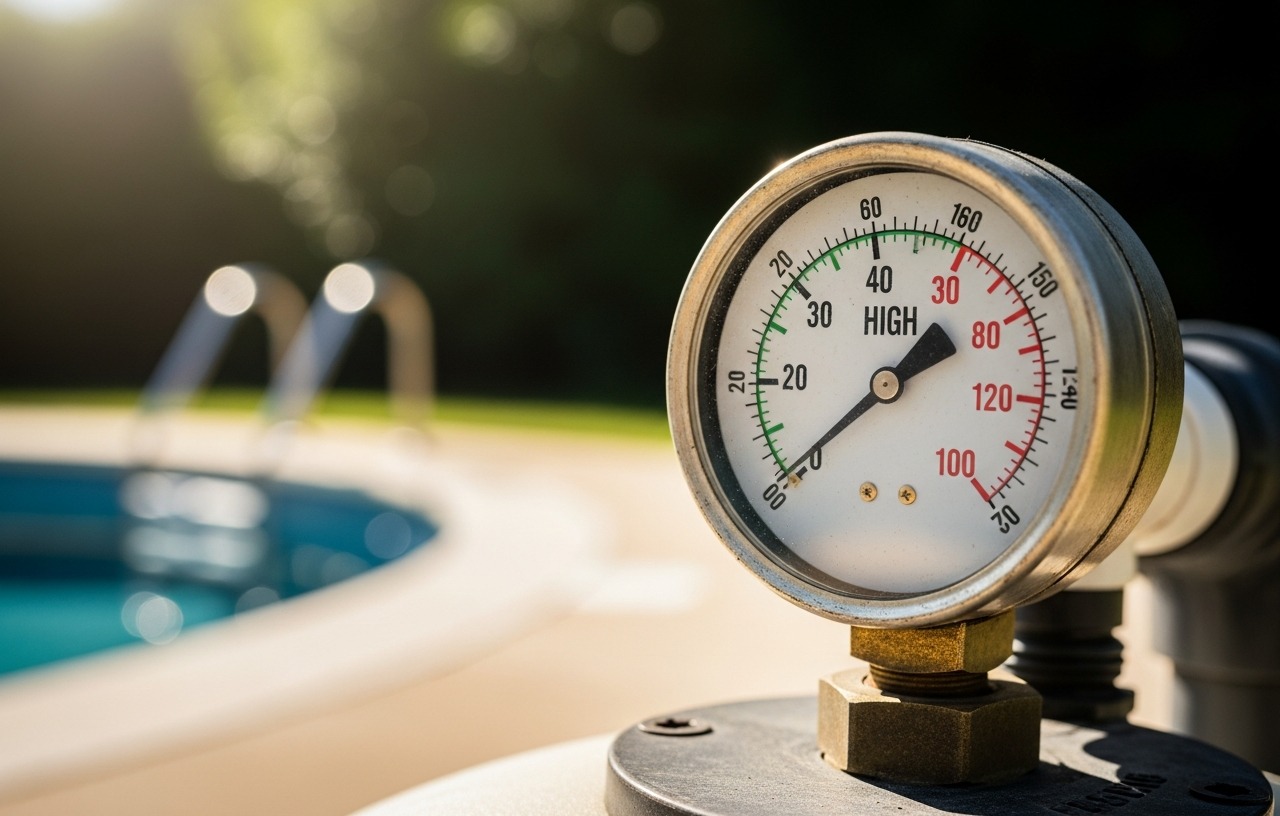
A good quality, easily readable pressure gauge is essential. It tells you when the filter is getting dirty and needs cleaning. A rising pressure indicates trapped debris and reduced flow.
Drain Plug
Make sure the filter has an accessible drain plug for easy winterization or media changes.
long term Cost of Ownership and Maintenance
The upfront cost of a filter is only part of the equation. Consider the ongoing expenses and effort required.
- Water Waste: Sand and DE filters require backwashing, which expels hundreds of gallons of treated pool water. This water must be replaced, incurring costs for water, chemicals, and heating.
- Filter Media Replacement: Sand needs replacement every 5-10 years. Cartridges every 1-3 years. DE powder is a recurring cost.
- Electricity Consumption: An undersized or inefficient filter can make your pump work harder and longer, increasing electricity bills. Variable-speed pumps paired with appropriately sized filters significantly reduce energy usage.
- Professional Service: While many filter maintenance tasks are DIY, some repairs or installations may require a professional. Replacing a major component like a filter tank or valve might add $200-$500 for labor to the parts cost.
Recommendation
For most residential pool owners, a cartridge filter offers the best balance of filtration quality, ease of maintenance, and long term cost. They provide excellent water clarity without the water waste of backwashing or the messy handling of DE powder. While the initial cost might be slightly higher than sand, the savings in water and chemicals, coupled with superior filtration, often make them the most practical choice.
If budget is the primary concern and you do not mind regular backwashing, a sand filter is a solid, reliable choice, especially when considering modern filter media like filter balls. If you demand the absolute clearest water and are prepared for more involved maintenance, a DE filter delivers unmatched performance.
Regardless of your choice, make sure the filter's GPM capacity is appropriately sized for your pool's volume and your pump's flow rate. This ensures efficient and effective filtration for years to come.
AQUASTRONG Pool Filter Balls for Sand Filter Pump, 5.5 lbs Reusable Sand Filter Balls (Replaces 180 lbs Pool Filter Sand),
- Efficient Filtration: AQUASTRONG Pool Filter Balls offer superior performance compared to traditional.
- 5.5 lbs Filter Balls Replace 180 lbs of Sand: These fiber filter balls are a lightweight and more.
- Easy to Clean & Reusable: Designed for hassle-free maintenance, these durable sand filter balls offer.
- Universally Compatible: Compatible with all filters, including sand, cartridge, and DE filters. These.
3.1 lbs Pool Filter Balls for Sand Filter, Eco-Friendly Reusable Pool Fiber Filter Balls Replace Pool Filter Sand, Pool Filter
- These fiber filter balls can perfectly replace the traditional pool filter sand, it is lighter, more.
- Pool sand filter ball is made of 100% eco-friendly polyester fiber. It not only has the advantages of.
- These fiber filter balls can filter impurities as low as 5-3 microns, ensuring that your swimming pool.
- We provide a high quality polyester fiber mesh bag for these filter balls, which you can place fliter ball.
MAQIHAN 50PCS Pool Filter Balls for Sand-Filter - Dry Filter Sand Balls,Reusable Swimming Pool Filter Media,Soft Filtration
- Efficient and Low Loss: Made from polyester fiber, our filter balls are reusable. They can be used as a.
- Superior to Traditional Filter Products: Compared to traditional filter products, our filter balls are.
- Longevity & Durability: The polyester fiber material used in our filter balls is highly durable with.
- Versatile Applications: Our filter balls play important roles in various settings such as swimming.