
MAQIHAN 50PCS Pool Filter Balls for Sand-Filter - Dry Filter Sand Balls,Reusable Swimming Pool Filter Media,Soft Filtration
- Efficient and Low Loss: Made from polyester fiber, our filter balls are reusable. They can be used as a.
- Superior to Traditional Filter Products: Compared to traditional filter products, our filter balls are.
- Longevity & Durability: The polyester fiber material used in our filter balls is highly durable with.
- Versatile Applications: Our filter balls play important roles in various settings such as swimming.

WLLEYAY 4 lbs Pool Filter Balls, New Upgrade Efficient Swimming Pool Filter Sand Alternative, Reusable Eco-Friendly Blue Filter
- 2026 New Upgraded cost effective: These pool filter media balls can efficiently replace traditional.
- New Pool Filter Material: Pool filter balls are made of high quality eco-friendly polyester fiber. It not.
- High Efficiency Filtration: These filter balls can filter tiny suspended solids that are not easy to.
- Reusable: Filter media balls are different from sand, these reusable filter balls are machine wash.
A steady rise in pool filter pressure accompanied by cloudy water often points to a clogged sand filter. Sand filters work by trapping debris in their granular media, but over time, this media can become saturated with oils, minerals, and fine particles. Regular backwashing helps, but a deep cleaning or sand replacement is occasionally necessary to restore peak performance and maintain clear, inviting pool water.
Why Deep Clean Your Pool Filter Sand?
Your pool's sand filter is the workhorse of its filtration system. It circulates pool water through a bed of specialized sand, trapping dirt, algae, and other contaminants. Over time, these trapped particles, along with oils, lotions, and calcium deposits, accumulate within the sand bed. This accumulation reduces the filter's effectiveness, leading to less efficient water circulation and a noticeable decline in water clarity.
A deep clean goes beyond routine backwashing. It addresses the embedded grime and calcification that even powerful backwash cycles cannot dislodge. By thoroughly cleaning or replacing the sand, you ensure your filter operates at its maximum capacity, keeping your pool sparkling and reducing the strain on your pump.
Signs Your Pool Filter Sand Needs Cleaning
Observing your pool and its equipment provides clear indicators when it is time to clean your sand filter. Pay attention to these common symptoms:
- Cloudy or Murky Water: Despite proper chemical balancing, if your pool water remains hazy or dull, your filter may not be effectively removing suspended particles.
- Reduced Water Flow: You might notice weaker returns from your pool jets, indicating the filter is impeding water circulation.
- Consistently High Filter Pressure: Your filter gauge will show a pressure reading significantly above its normal operating range. This means the sand bed is choked with debris, making it harder for water to pass through. If your pool filter pressure is too high, cleaning the sand is a primary solution.
- Short Backwash Cycles: If backwashing seems less effective or the water coming out of the waste line clears up too quickly, the sand may be so clogged that it cannot release debris properly.
- Algae Blooms: A struggling filter cannot remove algae spores effectively, making your pool more susceptible to recurring algae problems.
Ignoring these signs can lead to increased chemical use, higher energy bills, and accelerated wear on your pool pump.
Tools and Materials for Cleaning Pool Filter Sand
Before you begin, gather the necessary tools and materials. Having everything on hand will make the process smoother and more efficient.
- Wet/Dry Vacuum (Shop-Vac)
- Garden Hose with Spray Nozzle
- Large Bucket or Tarp
- Sturdy Scoop or Small Shovel
- Safety Glasses and Gloves
- Flathead Screwdriver or Wrench (for clamps)
- Pool Filter Cleaner Chemical (optional, but recommended for deep cleaning)
- New Filter Sand (if replacing, typically #20 silica sand, 0.45-0.55mm)
- Duct Tape or Plastic Bag
- Replacement O-rings (optional, good to have on hand for gaskets)
How to Clean Pool Filter Sand: step by step Guide
This process typically takes 2-4 hours, depending on the size of your filter and whether you are just cleaning or fully replacing the sand. For a professional to replace sand, expect costs between $200 and $500, not including the sand itself.
Step 1: Prepare Your Pool System for Cleaning
Safety is the first priority. Turn off the pool pump at the breaker to prevent accidental startup. Close all valves leading to and from the filter to isolate it from the rest of the pool system. This prevents water from flowing into or out of the filter during the cleaning process.
Step 2: Backwash Your Sand Filter
Perform a thorough backwash cycle. Set your multiport valve to the 'Backwash' position. Turn the pump on and let it run until the water in the sight glass runs clear, usually 2-3 minutes. This removes loose debris and makes the deep cleaning easier. Turn off the pump, then set the valve to 'Rinse' for 30-60 seconds to clear residual dirty water from the lines. Turn off the pump again.
Step 3: Drain the Filter Tank
Locate the drain plug at the bottom of the filter tank. Place a bucket underneath or attach a hose to direct the water to a suitable drainage area. Remove the plug to allow the water to drain completely from the tank. This may take 15-30 minutes, depending on the filter size. If your filter has a separate air relief valve, opening it can speed up the draining process.
Step 4: Remove the Old Filter Sand
Once the tank is empty, remove the multiport valve. This usually involves loosening a large clamp or several bolts. Carefully lift the valve straight up. Be mindful of the standpipe, which extends down into the sand bed. Cover the open end of the standpipe with duct tape or a plastic bag to prevent sand from entering it. This is a critical step to protect the internal components.
Now, begin scooping out the old sand. A wet/dry vacuum is highly effective for this task. It can suction out the sand quickly and efficiently, especially as you get closer to the bottom. Work slowly and carefully to avoid damaging the laterals (small, slotted arms at the bottom of the standpipe). These laterals are fragile and essential for proper filtration.
For a typical residential pool filter, you might remove 150 to 300 pounds of sand. Each 50-pound bag of filter sand costs approximately $20 to $40.
Step 5: Inspect and Clean Laterals and Tank Interior
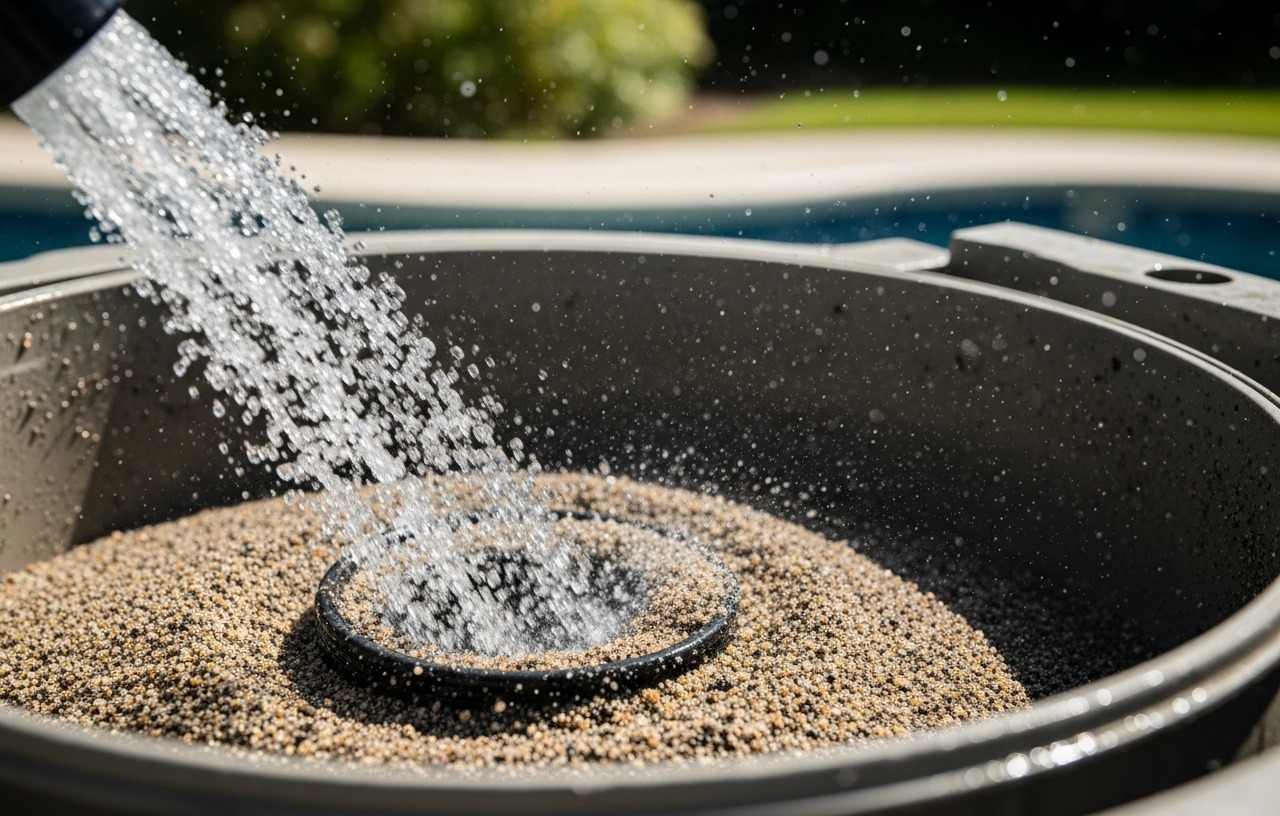
With all the sand removed, you can clearly see the laterals at the bottom of the tank. Inspect them for any cracks, breaks, or blockages. If any laterals are damaged, they should be replaced. Replacement lateral assemblies typically cost between $40 and $80. Use a garden hose to thoroughly rinse the inside of the filter tank and the laterals. Make sure to dislodge any remaining debris or calcified deposits. You can also use a specialized pool filter cleaner chemical at this stage. Follow the product instructions, which usually involve mixing it with water and allowing it to soak for several hours before rinsing.
Step 6: Add New Filter Sand
If you are replacing the sand, ensure the laterals are securely in place and the standpipe opening remains covered. Pour water into the tank until it covers the laterals by about 6-8 inches. This water acts as a cushion, preventing the new sand from damaging the laterals as it falls. Slowly add the new filter sand, distributing it evenly. The question of how much sand for pool filter depends on your specific filter model. Refer to your filter's owner's manual for the exact recommended amount. Generally, pool filters require #20 silica sand, which has a specific grain size (0.45-0.55mm) designed for optimal filtration.
The sand should fill the tank to the manufacturer's specified level, typically leaving 6-12 inches of freeboard (empty space) from the top of the tank. This space allows for proper backwashing.
Step 7: Reassemble and Restart the System
Remove the tape or bag from the standpipe. Carefully lower the multiport valve back onto the tank, aligning it with the standpipe. Make sure the O-ring or gasket is properly seated to prevent leaks. Secure the clamp or bolts firmly, but do not overtighten. Reconnect all plumbing lines to the multiport valve.
Before turning on the pump, set the multiport valve to 'Backwash'. Turn on the pump and backwash for 2-3 minutes, or until the water in the sight glass runs clear. This removes any fine dust from the new sand. Turn off the pump, then set the valve to 'Rinse' for 30-60 seconds. Turn off the pump again, and finally, set the valve to 'Filter'. Open all valves to the pool system. Turn on the pump and check for any leaks. Prime the pump if necessary. If you encounter issues, refer to our guide on Pool Pump Not Priming? Here's How to Fix It. Monitor your filter pressure and water clarity over the next few days.
Considering Filter Sand Alternatives?
While traditional filter sand is effective, alternative filter media like filter balls offer distinct advantages. These synthetic fiber balls can often provide superior filtration, trap finer particles, and are significantly lighter, making them easier to handle for cleaning or replacement. They are also reusable and can last longer than sand.
MAQIHAN Pool Filter Balls
MAQIHAN 50PCS Pool Filter Balls for Sand-Filter - Dry Filter Sand Balls,Reusable Swimming Pool Filter Media,Soft Filtration are made from polyester fiber, making them highly reusable. They offer efficient and low-loss filtration, outperforming traditional filter products by capturing finer suspended solids. Their polyester fiber material contributes to longevity and durability, providing a reliable alternative to sand.
These filter balls are an excellent choice for those seeking an eco-friendly and high-performance filtration solution. They typically require less backwashing and can significantly improve water clarity.
WLLEYAY Pool Filter Balls
WLLEYAY 4 lbs Pool Filter Balls, New Upgrade Efficient Swimming Pool Filter Sand Alternative, Reusable Eco-Friendly Blue Filter are a 2026 new upgraded, cost effective option. Made from high quality eco-friendly polyester fiber, these filter balls efficiently replace traditional sand. They provide high-efficiency filtration, capable of filtering tiny suspended solids that are often missed by sand, leading to clearer pool water.
The WLLEYAY filter balls offer a new generation of filter media, combining environmental benefits with superior filtration power. They are designed for easy handling and long term use.
Maintaining Your Sand Filter for long term Clarity
After a deep clean or sand replacement, regular maintenance is key to keeping your pool water clear. Perform routine backwashing when your filter pressure rises 7-10 PSI above its clean operating pressure. Test your pool's water chemistry regularly and balance it as needed. For comprehensive seasonal preparation, consult our How to Open Your Pool for Summer: Complete 2026 Checklist.
Consider using a filter cleaner chemical periodically, perhaps once or twice a season, to dissolve oils and mineral buildup. This preventative measure can extend the life of your sand and maintain filtration efficiency.
When to Replace Pool Filter Sand
Even with regular deep cleaning, pool filter sand does not last forever. Over time, the sharp edges of the sand grains wear down, becoming smooth and rounded. This reduces their ability to trap fine particles effectively, leading to perpetually cloudy water despite proper cleaning. Generally, pool filter sand should be replaced every 3 to 5 years. If you notice persistent cloudiness, increased chemical demand, or a shorter interval between backwashes, it might be time for a fresh batch of sand or a switch to filter balls.
MAQIHAN 50PCS Pool Filter Balls for Sand-Filter - Dry Filter Sand Balls,Reusable Swimming Pool Filter Media,Soft Filtration
- Efficient and Low Loss: Made from polyester fiber, our filter balls are reusable. They can be used as a.
- Superior to Traditional Filter Products: Compared to traditional filter products, our filter balls are.
- Longevity & Durability: The polyester fiber material used in our filter balls is highly durable with.
- Versatile Applications: Our filter balls play important roles in various settings such as swimming.
WLLEYAY 4 lbs Pool Filter Balls, New Upgrade Efficient Swimming Pool Filter Sand Alternative, Reusable Eco-Friendly Blue Filter
- 2026 New Upgraded cost effective: These pool filter media balls can efficiently replace traditional.
- New Pool Filter Material: Pool filter balls are made of high quality eco-friendly polyester fiber. It not.
- High Efficiency Filtration: These filter balls can filter tiny suspended solids that are not easy to.
- Reusable: Filter media balls are different from sand, these reusable filter balls are machine wash.