
AquaDoc Saltwater Pool Starter Enzyme Treatment - 16 oz Treats up to 15,000 Gallons - Saltwater Pool Opening Chemical for Above Ground and I
- Pool Startup Chemical for Saltwater Pool Opening - AquaDoc Swimming Pool Opener helps reduce winter debris and buildup commonly found when opening a saltwater pool after winter closing. Designed to work alongside pool st
- Enzyme Based Saltwater Pool Opening Treatment - It is formulated with natural enzymes that help reduce oils, leaves, and residue left behind during winter, that may contribute to cloudy water during the start up process.
- Compatible With Pool Opening Kits and Filters - It works with cartridge, DE, and sand filtration systems and fits easily into most saltwater pool chemical starter kit routines.
- Designed for Saltwater Pool Systems - It is compatible with saltwater systems and works alongside common saltwater pool chemicals used during seasonal pool start up.
- Made in the USA - AquaDoc saltwater pool chemicals are proudly manufactured in the USA and produced to consistent quality standards for dependable seasonal pool care.

SeaKlear AquaPill AP70 SpringPill Swimming Pool Start Up Pill
- Easy to use; simply place in skimmer; automatically dispenses
- Makes pool openings faster and easier than ever
- Saves you time and money
- Saves you time and money
- Safe for all surfaces and filters
That murky, debris-laden pool cover means one thing: it is time to prepare your swimming oasis for the glorious summer of 2026. Getting your pool ready for the season involves more than just pulling off the cover, it requires a systematic approach to ensure clean, safe water. This guide provides a complete checklist to help you open your pool efficiently, whether it is an inground or above ground model.
Many pool owners dread the task of opening their pool, often putting it off until the last minute. However, tackling this job early can save you significant time and money. A typical professional pool opening service might cost anywhere from $250 to $500, depending on your pool size and location. Resisting that urge can be a smart move. Opening your pool when water temperatures are still below 65 degrees Fahrenheit makes it much easier to manage water chemistry. Cooler water inhibits algae growth, giving you a head start on maintaining clear water.
Waiting until temperatures rise significantly often means battling a green, cloudy pool from day one, which requires more chemicals and extended filtration time. Early opening also allows you to identify and address any equipment issues before you are desperate for a swim. Think of it as preventative maintenance that pays off in clearer water and less frustration later.
Essential Tools and Supplies for Pool Opening
Before you begin, gather everything you will need. Having these items on hand prevents interruptions and makes the process much smoother. Here is a checklist of common tools and supplies:
- Cover Pump: Essential for removing standing water from your pool cover. Expect to pay $50 to $150 for a reliable model.
- Soft-Bristle Brush: For cleaning the pool walls and floor. A good brush costs around $15 to $30.
- Telescopic Pole: For attaching brushes, skimmers, and vacuums. Prices range from $30 to $60.
- Pool Skimmer Net/Leaf Rake: To remove large debris. About $10 to $25.
- Pool Vacuum (Manual or Robotic): For cleaning the pool bottom. Manual systems are $50 to $150, while robotic cleaners can be $500 to $1500+.
- Water Test Kit or Test Strips: Critical for balancing chemicals. Strips are $15 to $30, liquid kits are $40 to $80.
- Pool Opening Chemicals: Shock, algaecide, stain preventative, pH increaser/decreaser. A basic startup chemical kit might cost $50 to $100, or individual chemicals range from $10 to $30 each.
- Bucket and Garden Hose: For cleaning and filling.
- Safety Goggles and Gloves: For handling chemicals.
- Winter Plug Removal Tool: If you used expansion plugs.
- Lubricant: For O-rings (e.g., silicone-based).
How to Open Your Pool for Summer: A step by step Guide
Follow these steps to successfully open your pool for the 2026 swimming season. This guide applies whether you are learning how to open above ground pool for summer or an inground model.
Step 1: Clear and Remove Your Pool Cover
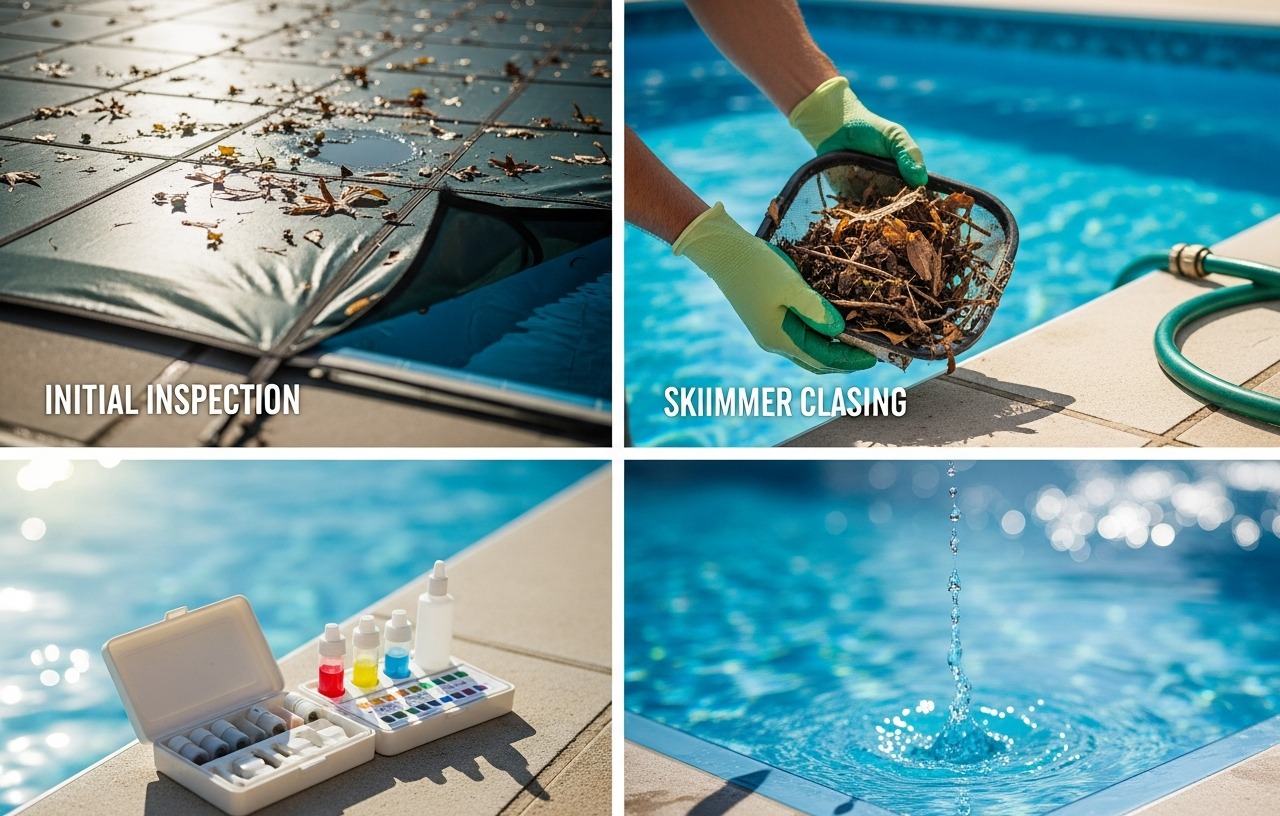
The first task is to remove any standing water and debris from your winter cover. If you have an above ground pool cover, this might be simpler than an inground safety cover, but the principle is the same. Use your cover pump to remove all water. Be careful not to let debris fall into the pool water as you pump. Once the water is mostly off, use a leaf rake or skimmer net to scoop out leaves, twigs, and other larger debris.
Carefully unstrap or unanchor the cover. Gather it slowly, trying to fold it in a way that keeps any remaining debris on top, preventing it from entering your pool. Enlist a helper for larger covers, as they can be heavy and unwieldy. Be gentle; a torn cover means an expensive replacement, typically $400 to $1,000 for an above ground cover and $1,500 to $3,000+ for an inground safety cover.
Step 2: Clean and Store the Pool Cover
Once removed, lay the pool cover flat on a clean surface, like your driveway or lawn. Use a soft brush and a mild cleaning solution, or specialized pool cover cleaner (about $20 to $40), to scrub both sides. Rinse it thoroughly with a garden hose. Ensure it is completely dry before folding and storing it. Storing a damp cover encourages mold and mildew growth, which can damage the material. Store it in a cool, dry place away from direct sunlight and pests.
Step 3: Prepare the Pool Area and Return Lines
Remove any winterizing plugs from your skimmer, return lines, and cleaner lines. Reattach any pool accessories you removed for winter, such as skimmer baskets, return eyeballs, ladders, diving boards, and handrails. Inspect all these components for damage or wear and replace anything broken. This is also a good time to clear any debris from around the pool deck and equipment pad.
Step 4: Reconnect Pool Equipment
This step involves reconnecting your pump, filter, heater, and any other plumbing components. Ensure all valves are in their correct positions for circulation. If you drained your filter or heater, follow the manufacturer's instructions for refilling them. Inspect all pipes and connections for cracks or leaks that might have occurred over winter.
For above ground pools, this might involve setting up your pump and filter system. If you need a refresher on this, refer to our guide on How to Set Up an Above Ground Pool Pump Correctly. If you spot any significant damage or are unsure about reconnecting complex equipment like a pool heater, it might be worth consulting a professional. A service call for a diagnostic could cost $150 to $250.
Step 5: Fill the Pool to Operating Level
Check your pool's water level. If it is low, use a garden hose to fill it to the middle of the skimmer opening. This ensures your pump will have sufficient water to prime and operate correctly without sucking air. For inground pools, especially those with automatic fillers, ensure the system is working.
Step 6: Prime the Pump and Start Filtration
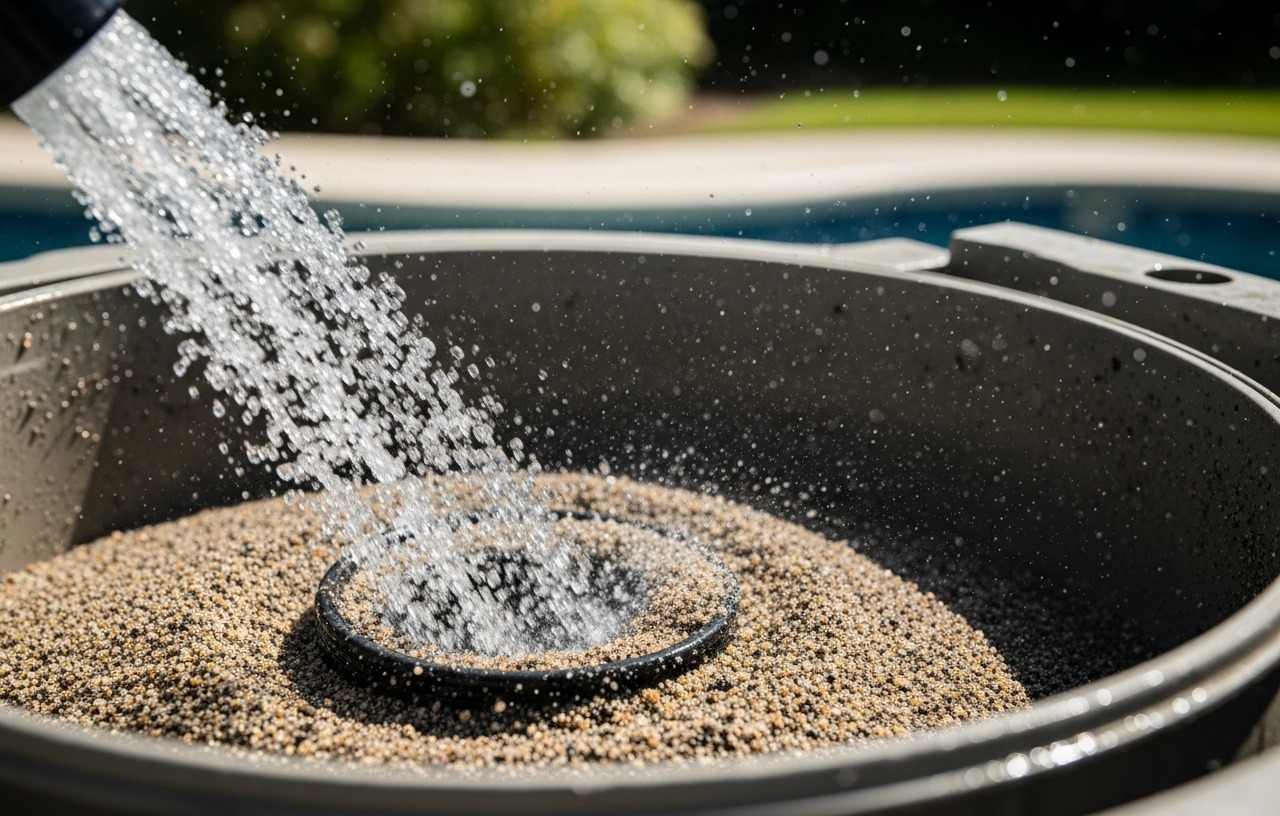
Before turning on your pump, ensure all valves are open and the skimmer basket and pump basket are clean and in place. Fill the pump's priming pot with water until it overflows, then quickly secure the lid. Turn on the pump. It might take a few minutes for the pump to pull water and establish full flow. If your pump struggles to prime, or you hear grinding noises, consult our guide Pool Pump Not Priming? Here's How to Fix It. Once primed, let the filtration system run continuously for 24-48 hours to circulate the water and begin clearing out fine debris.
Step 7: Initial Chemical Treatment and Balancing
With the filter running, it is time to test your water chemistry. Use your test kit or strips to measure pH, alkalinity, calcium hardness, and chlorine levels. Your goal is to get the water balanced before adding large amounts of shock. Ideal ranges are:
- pH: 7.4-7.6
- Alkalinity: 80-120 ppm
- Calcium Hardness: 180-220 ppm
Adjust pH first if it is off. If your pH is too high, you might need to add a pH decreaser. Learn more about this process in our article How to Lower Pool pH: step by step Guide for Clear Water.
Once basic levels are good, add an initial dose of shock. For a typical 15,000-gallon pool, this might be 1-2 pounds of granular shock, costing $10 to $20 per pound. Follow the product instructions carefully. You may also want to add an algaecide, particularly if your pool was a bit green, which costs $15 to $30 for a quart. A stain preventative (around $20 to $40) can also be beneficial at this stage.
"Opening a pool is all about setting yourself up for success," says Sandra Ruiz, a Senior Pool Technician at ClearWater Pools & Spas. "Many people skip the enzyme treatment, especially with saltwater pools, but it is a real time-saver. Products like AquaDoc Saltwater Pool Starter Enzyme Treatment help break down organic contaminants from winter, making the initial cleaning and chemical balancing much easier. It is a small investment that pays off in clearer water faster."
For saltwater pools, consider using a specialized product like AquaDoc Saltwater Pool Starter Enzyme Treatment - 16 oz. This enzyme-based solution is designed to reduce winter debris, oils, leaves, and residue, which often contribute to cloudy water during startup. It works well with cartridge, DE, and sand filters, fitting easily into most saltwater pool chemical starter kit routines.
Another excellent option for simplifying your pool opening is the SeaKlear AquaPill AP70 SpringPill Swimming Pool Start Up Pill. This easy to use pill simply gets placed in your skimmer and automatically dispenses a blend of clarifiers, enzymes, and stain inhibitors. It makes pool openings faster and easier, saving you time and money by proactively addressing common startup issues.
Step 8: Clean the Pool Thoroughly
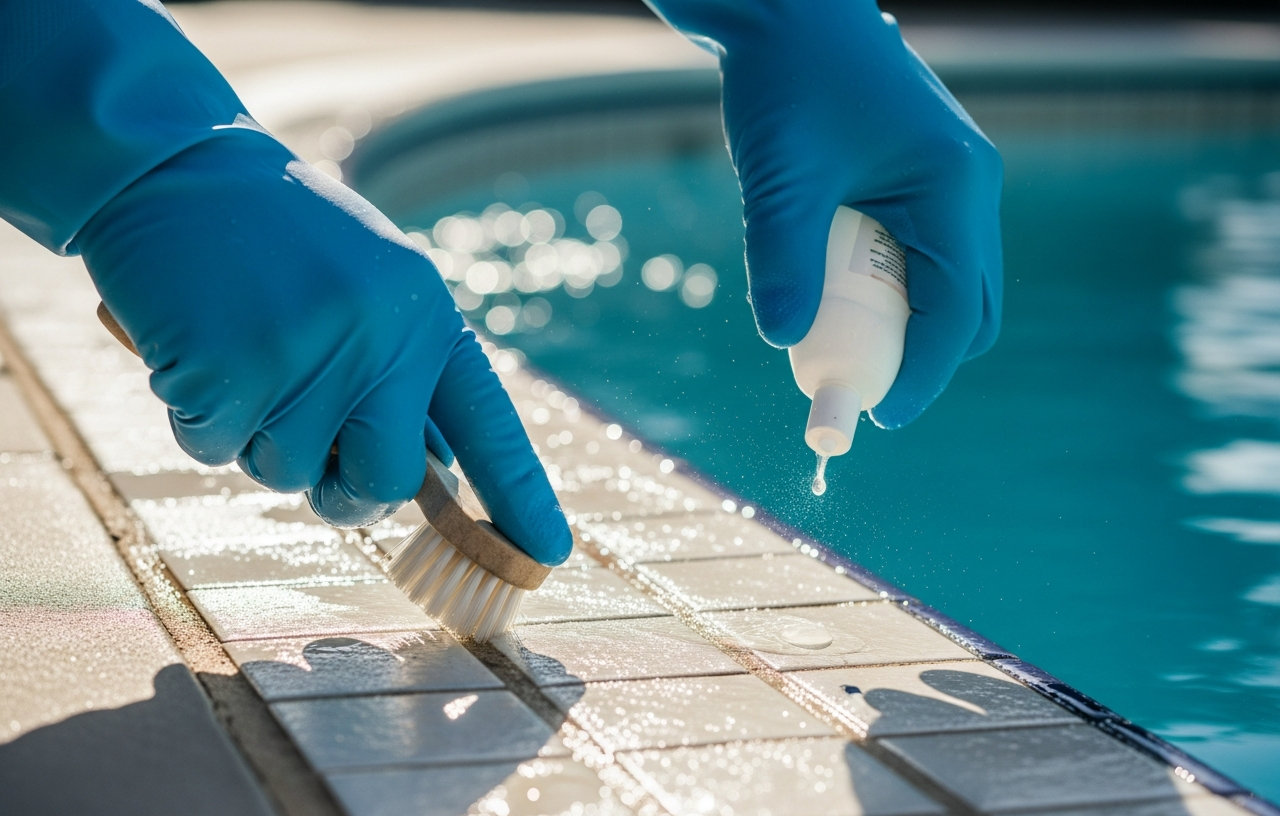
After the chemicals have circulated for 24 hours, it is time for a thorough cleaning. Brush all the walls, steps, and floor of your pool to dislodge any stuck-on debris. Then, use your pool vacuum to clean the bottom. For heavily soiled pools, you might need to vacuum to waste to avoid clogging your filter with large amounts of debris. This is a crucial step for how to get a pool ready for summer.
Step 9: Ongoing Filtration and Water Chemistry
Continue running your filter for several days, backwashing or cleaning cartridges as needed. Re-test your water chemistry daily and make any necessary adjustments. It can take several days, or even a week, for your water to become perfectly clear and balanced. Patience is key during this period.
"The biggest mistake I see is people rushing the process," explains Robert Kwan, owner of Pool & Spa Supply Co. "After you add your initial chemicals, give them time to work. Keep that filter running, and test your water daily. Don't expect crystal-clear water overnight. Consistent filtration and chemical adjustments are what get you there."
Opening Your Above Ground Pool for Summer
The steps for how to open an above ground pool for summer are largely the same as for inground pools. The main differences typically involve the cover removal, which is often a lighter tarp-style cover, and the setup of the filtration system. Ensure your above ground pool pump and filter are securely connected and free of leaks. Pay close attention to the water level, as above ground pools are more sensitive to being under-filled when priming the pump.
Opening Your Inground Pool for Summer
For how to open inground pool for summer, the process usually involves more extensive plumbing reconnections and potentially more robust winter covers. Safety covers, while heavier to remove, often keep pools much cleaner over winter. Be diligent about removing all winterizing plugs from skimmers, returns, and main drains. Ensure all valves are correctly positioned to allow water flow to and from all equipment, including any pool heaters or automatic cleaners.
Opening your pool for the summer of 2026 is a rewarding DIY project that ensures your backyard oasis is ready for enjoyment. Enjoy your sparkling clean pool!
AquaDoc Saltwater Pool Starter Enzyme Treatment - 16 oz Treats up to 15,000 Gallons - Saltwater Pool Opening Chemical for Above Ground and I
- Pool Startup Chemical for Saltwater Pool Opening - AquaDoc Swimming Pool Opener helps reduce winter debris and buildup commonly found when opening a saltwater pool after winter closing. Designed to work alongside pool st
- Enzyme Based Saltwater Pool Opening Treatment - It is formulated with natural enzymes that help reduce oils, leaves, and residue left behind during winter, that may contribute to cloudy water during the start up process.
- Compatible With Pool Opening Kits and Filters - It works with cartridge, DE, and sand filtration systems and fits easily into most saltwater pool chemical starter kit routines.
- Designed for Saltwater Pool Systems - It is compatible with saltwater systems and works alongside common saltwater pool chemicals used during seasonal pool start up.
- Made in the USA - AquaDoc saltwater pool chemicals are proudly manufactured in the USA and produced to consistent quality standards for dependable seasonal pool care.
SeaKlear AquaPill AP70 SpringPill Swimming Pool Start Up Pill
- Easy to use; simply place in skimmer; automatically dispenses
- Makes pool openings faster and easier than ever
- Saves you time and money
- Saves you time and money
- Safe for all surfaces and filters