
Crevice Cleaning Brush Tool - Heavy Duty Hard Bristle Gap Brush for Deep Cleaning - Ultra-Thin Grout Scrubber for Bathroom,
- Stop struggling with standard sponges that cannot reach tight spaces. Our ultra-stiff PET bristles power.
- Measuring an incredibly slim 0.15 inches thick, this multifunctional cleaning tool effortlessly glides.
- From scrubbing kitchen stove gaps and faucet bases to detailing your shower corner, this versatile gap.
- Built exceptionally tough for daily use and thoroughly tested to withstand hundreds of intense scrubbing.

U.S. Pool Supply Hand-Held Pool Scrub Brush, 2 Pack - Scrubbing Scouring Sponge Pad - Clean Pool Tile & Grout, Walls, Vinyl
- Hand-held scrubbing scouring sponge pads
- Clean pool tile & grout, walls, vinyl liners, spas
- Clean surfaces in the kitchen, bathroom, and shower
- Full one year warranty
Unsightly dark lines marring your pool's pristine tile work often point to one culprit: dirty grout. Over time, pool tile grout can accumulate a stubborn mix of algae, mildew, calcium deposits, and general grime. This buildup not only detracts from your pool's appearance but can also foster unhealthy environments in the water. Cleaning swimming pool grout is a routine task that maintains both the beauty and hygiene of your swimming oasis. This guide will show you how to clean pool tile grout effectively, tackling everything from light discoloration to persistent algae stains.
Regular maintenance of your pool's tile and grout lines prevents major cleaning headaches and costly repairs down the line. Neglected grout can become a breeding ground for black algae, which is notoriously difficult to remove. Mineral deposits, especially calcium, can also harden on grout, making it appear white and crusty. Knowing how to clean pool tile and grout yourself saves money on professional services, which typically cost $80-$150 for a service call and an additional $50-$100 per hour for specialized cleaning, depending on the severity of the stains and the size of your pool.
Why Clean Swimming Pool Tile Grout?
Maintaining clean pool grout offers several benefits beyond just aesthetics. Clean grout helps to:
- Enhance Appearance: Restore the sparkling look of your pool tiles, making your entire pool area more inviting.
- Prevent Algae Growth: Eliminate a common hiding spot for algae, including stubborn black algae, which can spread to other pool surfaces.
- Preserve Grout Integrity: Regular cleaning prevents corrosive buildup that can erode grout over time, potentially leading to loose tiles.
- Improve Water Quality: Reduce the amount of organic matter and minerals that can leach into your pool water, helping maintain proper water chemistry.
Tools and Materials You Will Need
Before you begin to clean pool grout, gather the necessary supplies. Most items are readily available at home improvement stores or online.
- Safety goggles
- Rubber gloves
- Old clothes or swimwear
- Stiff-bristled nylon or plastic brush (never wire, as it can scratch tiles and grout)
- Grout brush, such as a Crevice Cleaning Brush Tool, for reaching tight spaces
- Hand-held scrubbing pad, like the U.S. Pool Supply Hand-Held Pool Scrub Brush, for general tile surfaces
- Bucket
- Measuring cups
- Spray bottle
- White vinegar (for calcium and mild stains)
- Baking soda (for general grime and mild stains)
- Mild pool tile cleaner (pH-neutral, acidic for calcium, alkaline for organic stains)
- Chlorine shock or liquid chlorine (for severe algae, especially when learning how to clean algae from pool tile grout)
- pH test kit or strips
- Pool brush
- Garden hose with a spray nozzle
Safety First: Important Precautions
Working with pool chemicals requires caution. Always prioritize your safety to prevent injury or chemical exposure. Always wear safety goggles and rubber gloves to protect your eyes and skin from splashes and chemical contact. Wear old clothes or swimwear that you do not mind getting stained. Ensure good ventilation in the area, especially if using stronger cleaning agents. Keep children and pets away from the cleaning area until the job is complete and all chemicals have been rinsed away. Never mix different cleaning chemicals, particularly bleach with acid, as this can create dangerous fumes.
step by step Guide: How to Clean Pool Tile Grout
The entire process of how to clean swimming pool tile grout typically takes 2-4 hours for a small to medium-sized pool, not including the time for refilling and rebalancing water. For larger pools or heavy staining, it may take longer.
Step 1: Assess the Grout Condition (Estimated Time: 15-30 minutes)
Before applying any cleaner, examine the type of buildup on your grout. Green or black discoloration usually indicates algae or mildew. White, crusty deposits are typically calcium or other mineral scale. General dirt and grime appear as dark, muddy stains. Identifying the stain type helps you choose the most effective cleaning solution for your pool tile and grout.
Step 2: Gather Your Tools and Safety Gear (Estimated Time: 10 minutes)
Lay out all your required tools and materials within easy reach. Put on your safety goggles and rubber gloves immediately. This preparation step makes the cleaning process more efficient and safer.
Step 3: Prepare the Pool Area (Estimated Time: 30-60 minutes)
For extensive cleaning of the waterline grout, you may need to lower your pool's water level. Use your pool pump's waste setting or a submersible pump to lower the water by 6-12 inches, exposing the entire tiled area you plan to clean. If only a small section of grout is affected, or if you are working on submerged areas, you may not need to lower the water. Use a standard pool brush to gently brush away any loose debris, leaves, or large algae clumps from the tile and grout surfaces. This prevents them from interfering with the cleaning agents.
Step 4: Choose Your Cleaning Solution (Estimated Time: 10 minutes)
Select a cleaner based on the type of stain:
- For Light Stains and General Grime: A paste of baking soda and water (mix to a thick consistency) or a 50/50 solution of white vinegar and water in a spray bottle works well. These are mild and safe for most pool surfaces.
- For Calcium Deposits: White vinegar is an effective mild acid. For tougher calcium, consider a commercial tile cleaner specifically designed to remove calcium scale from pools. Make sure it is safe for your pool's surface materials.
- For Algae and Mildew: A diluted chlorine solution (1 part liquid chlorine to 5-10 parts water) is effective. For persistent black algae, you might need to use a stronger concentration or a specialized black algae remover.
Always test your chosen cleaning solution on an inconspicuous area of tile and grout first to ensure it does not cause discoloration or damage.
Step 5: Apply the Cleaner (Estimated Time: 15-30 minutes)
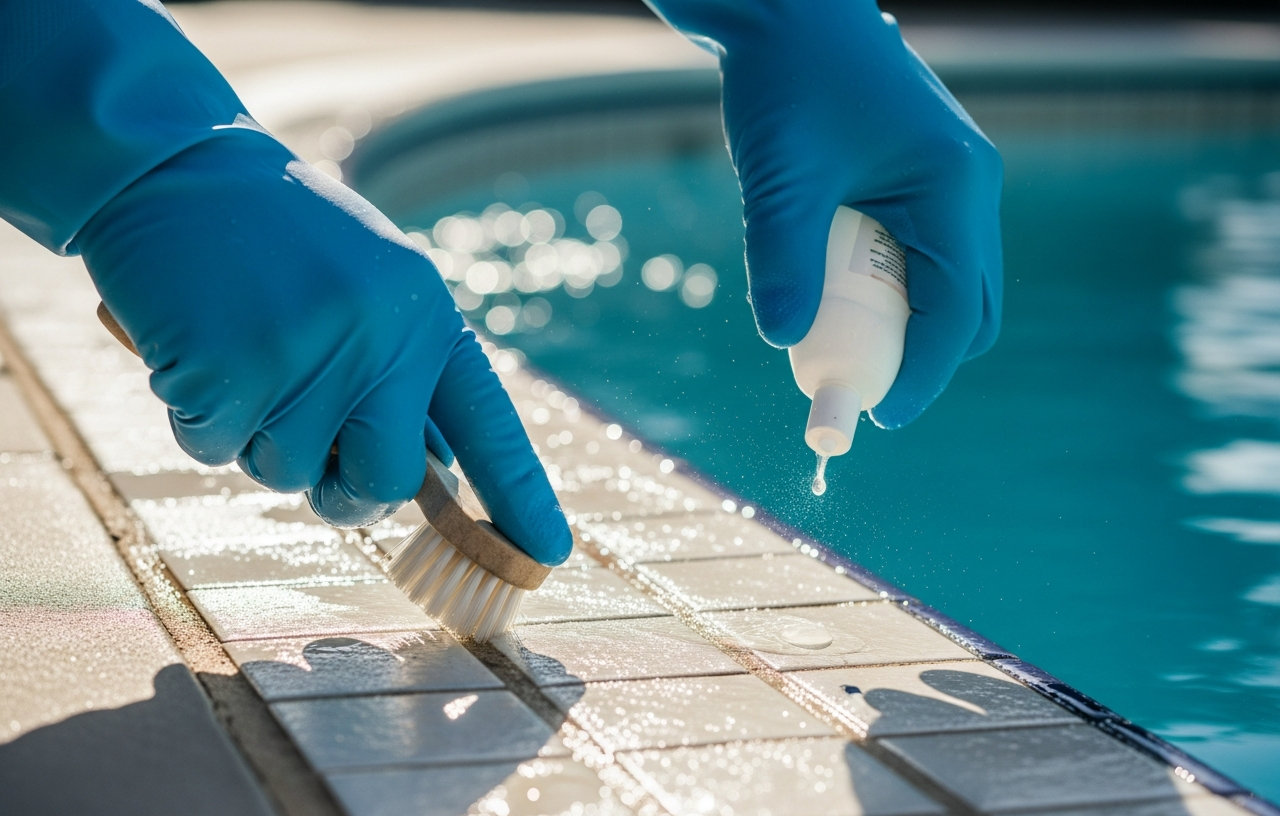
Apply your chosen cleaning solution directly to the grout lines and affected tile areas. If using a spray bottle, mist the solution evenly. If using a paste, apply it generously with a brush or gloved hand. Let the cleaner sit for 10-15 minutes, allowing it to penetrate and break down the stains. Do not let acidic solutions dry on the tile, especially if you have natural stone tiles.
Step 6: Scrub the Grout Lines (Estimated Time: 30-60 minutes)
This is where the elbow grease comes in. Use a stiff-bristled nylon or plastic brush to scrub the grout lines vigorously. For the narrow, hard-to-reach crevices, a specialized grout brush is invaluable. The Crevice Cleaning Brush Tool, with its ultra-thin profile and stiff PET bristles, powers through grime in tight spaces. For general tile and wider grout lines, a tool like the U.S. Pool Supply Hand-Held Pool Scrub Brush offers a comfortable grip and effective scrubbing power. Work in small sections, applying consistent pressure. If you encounter stubborn spots, reapply the cleaner and let it sit for a few more minutes before scrubbing again.
Step 7: Rinse Thoroughly (Estimated Time: 20-40 minutes)
Once you have scrubbed a section, use a garden hose to rinse away the cleaning solution and loosened grime. Make sure to rinse thoroughly to remove all chemical residue. If working with the water level lowered, direct the rinse water towards the main drain or out of the pool if possible. If cleaning submerged areas, use a pool brush to agitate the water near the cleaned areas, helping to dilute and disperse any remaining cleaner.
Step 8: Address Stubborn Stains (Estimated Time: Varies)
Some stains, particularly black algae or thick calcium scale, may require a second application or a stronger treatment. For persistent algae, consider a more concentrated chlorine solution or a targeted algae remover designed for pool surfaces. For heavy calcium, a stronger acidic cleaner might be necessary, but always use with extreme caution and follow manufacturer instructions precisely. Repeat the application, dwell time, scrubbing, and rinsing steps until the stains are gone.
Step 9: Repeat if Necessary (Estimated Time: Varies)
Move to the next section of your pool's tile and grout. Repeat steps 5 through 8 until all affected areas are clean. Be patient. Cleaning pool tile grout can be a time consuming but rewarding process.
Step 10: Refill and Balance Water (Estimated Time: Several hours)
After all cleaning is complete and all residue is rinsed, refill your pool to its normal operating level. Once full, test your pool water chemistry using a pH test kit. Cleaning chemicals can affect pH and alkalinity. Adjust your water balance as needed. For example, if your pH is too high, you may need to add a pH reducer. Learn how to lower pool pH for clear, balanced water. Proper water balance is key to preventing future stains and protecting your pool equipment.
Preventative Measures for Clean Pool Grout
Once you have cleaned your pool tile grout, maintaining its pristine condition is simpler than the initial deep clean. Implement these practices:
- Regular Brushing: Use a dedicated pool brush weekly to gently scrub the tile and grout lines. This dislodges nascent algae and mineral deposits before they can set.
- Maintain Water Chemistry: Consistently test and balance your pool water's pH, alkalinity, and sanitizer levels. Balanced water prevents mineral scaling and algae growth. High pH, for instance, encourages calcium buildup on surfaces.
- Ensure Proper Filtration: A well-functioning filter system removes microscopic particles and organic matter that contribute to staining. Make sure your pool filter is clean and operating efficiently. You can learn how to clean pool filter sand for optimal performance.
- Shock Your Pool: Periodically shock your pool according to manufacturer recommendations. This oxidizes organic contaminants and kills algae spores, helping to keep grout lines clean.
- Consider Pool Opening Checklist: How to Open Your Pool for Summer: Complete 2026 Checklist to include grout cleaning in your seasonal maintenance.
When to Call a Professional
Most pool tile and grout cleaning can be a DIY project. However, certain situations warrant professional help. If you have extremely heavy calcium buildup that resists acidic cleaners, or if you suspect structural damage to your grout or tiles, a professional pool technician can assess the situation. They have access to stronger, specialized equipment and chemicals, and can address underlying issues. Professional grout cleaning services can cost between $300 and $700 for an average-sized residential pool, depending on the extent of the work required.
Cleaning pool tile grout is an essential part of pool ownership.
Crevice Cleaning Brush Tool - Heavy Duty Hard Bristle Gap Brush for Deep Cleaning - Ultra-Thin Grout Scrubber for Bathroom,
- Stop struggling with standard sponges that cannot reach tight spaces. Our ultra-stiff PET bristles power.
- Measuring an incredibly slim 0.15 inches thick, this multifunctional cleaning tool effortlessly glides.
- From scrubbing kitchen stove gaps and faucet bases to detailing your shower corner, this versatile gap.
- Built exceptionally tough for daily use and thoroughly tested to withstand hundreds of intense scrubbing.
U.S. Pool Supply Hand-Held Pool Scrub Brush, 2 Pack - Scrubbing Scouring Sponge Pad - Clean Pool Tile & Grout, Walls, Vinyl
- Hand-held scrubbing scouring sponge pads
- Clean pool tile & grout, walls, vinyl liners, spas
- Clean surfaces in the kitchen, bathroom, and shower
- Full one year warranty