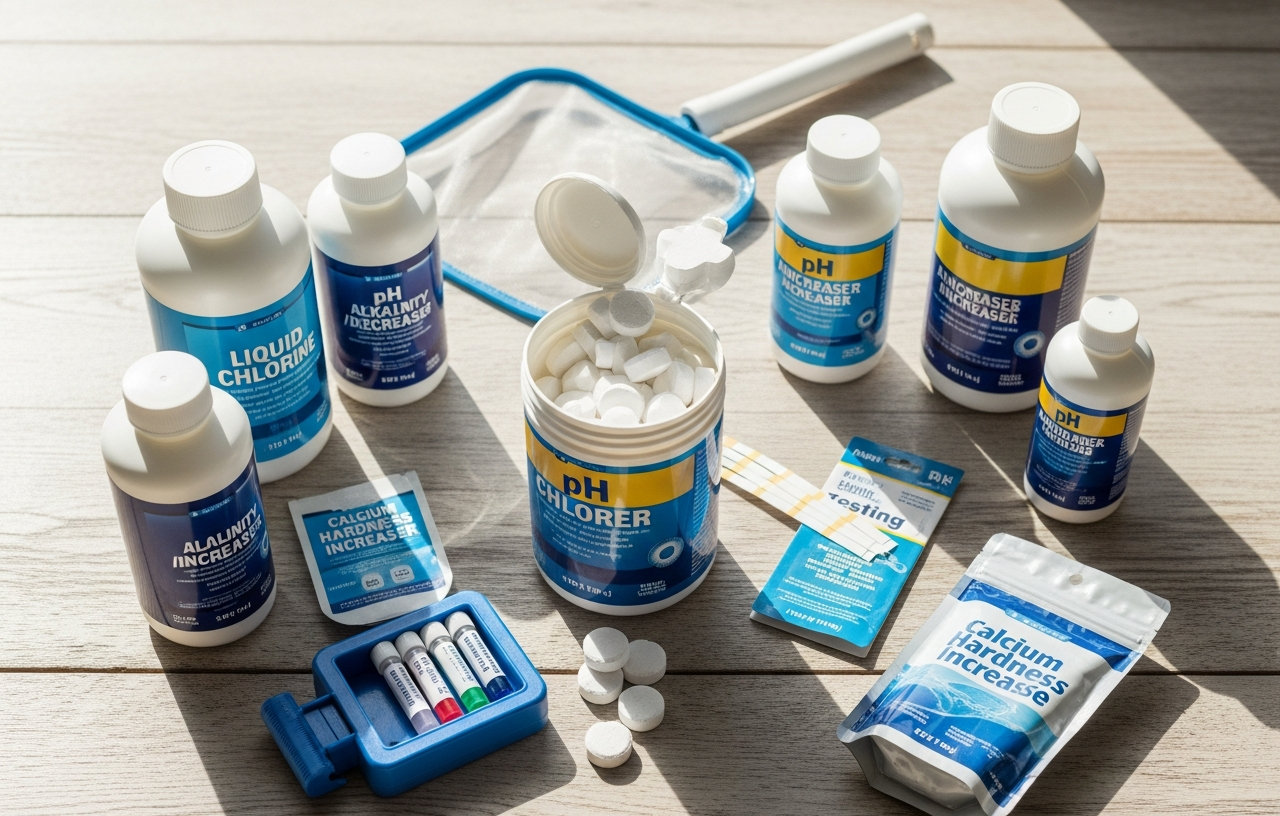
Maintaining a swimming pool requires consistent chemical treatment, costing most owners between $300 and $800 per year for essential chemicals, with variations based on pool size and type. This estimate covers the core products needed to keep water clean, clear, and safe for swimming throughout the season. Understanding these costs helps homeowners budget effectively for pool ownership.
Factors like pool volume, frequency of use, local climate, and the type of sanitizer chosen all influence the total annual chemical expense. A small, above-ground chlorine pool will naturally cost less to maintain than a large, in-ground saltwater pool with heavy bather loads. Unexpected issues, such as severe algae blooms, can also lead to additional, unplanned chemical purchases.
Understanding Your Pool's Chemical Needs
Different pool types have distinct chemical requirements. An in-ground pool, often larger in volume, demands more chemicals than an above-ground model. Similarly, the choice between a traditional chlorine system and a saltwater generator impacts your shopping list.
Chlorine pools rely on a steady supply of chlorine, whether in tablet, granular, or liquid form, to sanitize the water. They also need various balancing chemicals. Saltwater pools, while generating chlorine from salt, still require initial salt doses and occasional balancing agents. You can learn more about these differences by reading Saltwater Pool vs. Chlorine Pool: Which is Right for You?
Impact of Pool Size and Usage on Chemical Costs
A larger pool volume means more water to treat. For example, a 10,000-gallon pool uses less chlorine than a 25,000-gallon pool. Pool chemistry also shifts with bather load. More swimmers introduce more contaminants, necessitating higher doses of sanitizers and shock treatments.
Climate plays a role. Pools in warmer regions may experience faster algae growth and higher evaporation rates, requiring more frequent chemical adjustments and refills. Heavy rainfall can dilute chemicals, making further additions necessary. Conversely, pools in cooler areas may have shorter swimming seasons, reducing overall chemical usage.
Breakdown of Essential Pool Chemical Costs (2026 Estimates)
Here is a detailed look at the annual cost ranges for common pool chemicals, based on an average 15,000-20,000 gallon residential pool operating for a typical 4-6 month season.
Sanitizers: The Core of Clean Water
-
Chlorine (Tablets, Granular, Liquid): $100 - $300 per year
Chlorine is the most common sanitizer. 3-inch chlorine tablets (trichlor) are popular for their slow release, often costing $60-$120 for a 25-pound bucket. Granular chlorine (dichlor) or liquid chlorine (sodium hypochlorite) are also used for shocking or daily sanitizing, adding $40-$80 to annual costs. Heavy usage or larger pools will push these costs higher. -
Salt for Saltwater Pools: Initial $50-$150, then $20-$50 per year for replenishment
Saltwater pools convert salt into chlorine. The initial salt fill can cost $50-$150. After that, annual replenishment due to splash-out or backwashing typically costs $20-$50 for a few bags of pool salt.
pH Adjusters: Keeping Water Balanced
-
pH Increaser (Soda Ash): $15 - $35 per year
Used to raise low pH levels. A 5-pound container typically costs $10-$20 and may last an entire season or more, depending on your water source. Maintaining proper pH is vital for swimmer comfort and chlorine effectiveness. You can find a step by step guide on how to lower pool pH on our site. -
pH Decreaser (Muriatic Acid or Dry Acid): $15 - $35 per year
Used to lower high pH levels. Muriatic acid costs $10-$15 per gallon. Dry acid, a safer alternative, costs $15-$25 for a 5-pound container. Most pools need one or the other, not both, regularly.
Alkalinity Increaser: Stabilizing pH
-
Sodium Bicarbonate (Baking Soda): $20 - $50 per year
Total alkalinity acts as a buffer for pH. Low alkalinity leads to rapid pH swings. A 10-20 pound bag costs $20-$40 and may be needed once or twice a season. This chemical is relatively inexpensive but essential for stable water chemistry.
Calcium Hardness Increaser: Protecting Equipment
-
Calcium Chloride: $20 - $40 per year
Proper calcium hardness prevents plaster etching and equipment corrosion. A 5-pound container costs around $15-$25. Many pools only need an initial dose and occasional top-ups, especially after heavy rain or significant water loss.
Shock Treatments: Dealing with Contaminants
-
Pool Shock (Dichlor, Cal Hypo, or Non-Chlorine Shock): $50 - $150 per year
Shocking oxidizes contaminants and kills algae. A typical pool owner might shock weekly or bi-weekly, using 1-2 pounds per treatment. Individual 1-pound bags cost $5-$10. A multi-pack can offer better value, bringing the per-pound cost down. This budget item can increase significantly if you frequently battle algae or have high bather loads.
Algaecides: Preventing Green Water
-
Algaecide: $30 - $80 per year
Used as a preventative measure or to treat existing algae. A quart of basic algaecide costs $15-$30 and often lasts several months for maintenance doses. Stronger, copper-based algaecides for severe problems can cost more.
Water Clarifiers: Enhancing Clarity
-
Flocculant or Clarifier: $20 - $50 per year
These products help tiny particles clump together so the filter can remove them. A quart-sized bottle costs $15-$25 and is used periodically to improve water sparkle. Some owners use it only when water appears dull.
Specialty Chemicals and Test Kits
-
Stain Removers, Metal Sequestrants, Filter Cleaners: $50 - $150 per year (as needed)
These are not always needed but can be essential for specific problems. Stain removers for rust or mineral deposits, metal sequestrants to prevent staining, and filter cleaners to prolong filter life fall into this category. Costs vary widely depending on the issue. -
Pool Water Test Kits/Strips: $20 - $100 per year
A basic test strip kit costs $20-$40 annually. A more accurate liquid test kit (like a DPD kit) costs $40-$100 but lasts several seasons, with reagent refills costing $15-$30 per year. Regular testing is fundamental for effective chemical management and preventing larger problems.
Annual Pool Opening and Closing Chemical Costs
The beginning and end of the swimming season involve specific chemical treatments. Many retailers sell opening kits for convenience. For a full checklist, see our guide on How to Open Your Pool for Summer.
Pool Closing Chemicals: $30 - $100
Closing chemicals typically include a winterizing algaecide, a stain and scale preventative, and a non-chlorine shock. These products help keep the water stable and prevent algae growth during the off-season, making spring opening easier.
DIY Chemical Management vs. Professional Pool Service
Managing pool chemicals yourself can save significant money, but it requires time and a willingness to learn. Professional pool service offers convenience but at a higher cost.
DIY Chemical Management
Doing your own chemical testing and balancing means you only pay for the chemicals themselves and a reliable test kit. The annual cost for chemicals (as detailed above) ranges from $300 to $800. The primary investment is your time, usually 15-30 minutes per week for testing and adding chemicals.
DIY makes financial sense for owners who enjoy hands-on maintenance, have a good understanding of water chemistry, or own smaller, less complex pools. Purchasing chemicals in bulk online or from warehouse clubs can further reduce costs. Learning to adjust pH, alkalinity, and calcium levels yourself avoids service call fees.
Professional Pool Service for Chemical Management
A professional pool service can handle all chemical testing, balancing, and additions. This typically costs $80-$150 per month for weekly or bi-weekly visits, totaling $960-$1800 annually. This fee often includes the cost of the chemicals themselves. Some services may charge extra for specialty chemicals or for opening/closing treatments.
A one-time service call for chemical balancing, perhaps to fix a persistent issue like green water, usually costs $80-$150 for the visit, plus the cost of any chemicals used. This option is suitable for owners who lack the time, prefer not to handle chemicals, or encounter complex water chemistry problems they cannot resolve. While more expensive, it offers convenience and expertise.
Consider professional help if you consistently struggle with cloudy water, algae, or skin and eye irritation despite your best efforts. This prevents larger chemical imbalances that require more expensive, larger doses to correct. A good liquid test kit is a smart initial investment.
Run Your Filter Adequately: Proper filtration removes debris and contaminants, reducing the burden on your sanitizers. Run your pump for 8-12 hours a day, or more with heavy use. Make sure your pool pump is operating correctly; issues like a pool pump not priming can affect filtration efficiency.
Use a Pool Cover: A pool cover reduces evaporation, which means less water (and chemicals) need to be added. It also blocks sunlight, inhibiting algae growth, and keeps debris out, lessening the need for shock and clarifiers.
Shower Before Swimming: Encouraging swimmers to rinse off before entering the pool reduces the amount of body oils, lotions, and other contaminants introduced, thereby decreasing the chemical demand.
Buy in Bulk: Purchasing larger containers of common chemicals like chlorine, pH increaser, and alkalinity increaser often results in a lower cost per pound. Store them properly in a cool, dry, well-ventilated area.
Maintain Proper Circulation: Good water circulation distributes chemicals evenly and helps the filter work efficiently. Make sure your skimmers and returns are functioning correctly. If your pool skimmer is not working, it can hinder circulation.
By actively managing your pool's chemistry and practicing good maintenance habits, you can often keep the average cost of pool chemicals per year within a reasonable budget.


