A loud grinding noise coming from your pool pump often means motor bearings are failing, a repair that can cost $20-$60 for parts if you do it yourself, or $200-$350 if you hire a professional. Many common pool pump issues have clear symptoms and predictable repair costs. Understanding these expenses helps you decide between a DIY fix or calling a pool technician.
Most pool pump repairs involve replacing a specific component rather than the entire unit. DIY part costs range from $10 for a capacitor to $100 for an impeller. Professional repairs, including a service call and labor, typically fall between $150 and $400 for common issues. A complete replacement pool pump motor can cost $200-$500 for the part alone, with professional installation pushing the total cost to $400-$800. For more extensive problems, the cost of replacing the entire pump might become more appealing than a series of expensive repairs. You can compare these costs with our guide on the Cost to Replace a Pool Pump: Prices & DIY vs. Identifying the symptom helps pinpoint the exact repair needed.
Motor Capacitor Failure
Symptom: The pump hums loudly when you try to start it, but the impeller does not spin. Sometimes it will start after a manual nudge, or it may just hum and do nothing. This often indicates a failed starting capacitor.
DIY Cost: A replacement capacitor costs $10-$40. This is one of the easiest DIY pool pump repairs. It usually involves turning off the power, removing a cover, disconnecting two wires, and installing the new capacitor. The process takes about 15-30 minutes.
Professional Cost: A technician will charge $80-$150 for a service call. Labor for this simple fix might be $75-$100. Total professional cost typically ranges from $165-$290.
Shaft Seal Leak
Symptom: Water drips steadily from the underside of the pump motor, usually where the motor housing meets the wet end (the volute). This leak often worsens when the pump runs. If left unaddressed, water can enter the motor bearings, causing further damage.
DIY Cost: A shaft seal kit costs $15-$50. Replacing a shaft seal requires disassembling the wet end of the pump and removing the impeller. This repair takes 1-2 hours and involves careful handling of parts and proper reassembly to avoid new leaks. It is a manageable task for most DIYers.
Professional Cost: Expect to pay $80-$150 for a service call and an hour or two of labor at $75-$150 per hour. The total cost for a professional shaft seal replacement is usually $200-$350.
Clogged or Damaged Impeller
Symptom: The pump runs, but there is little to no water movement, or weak suction at the skimmer. The pump may also make an unusual grinding noise if something is caught in the impeller. This issue can also lead to your pool pump not priming correctly. If your pool pump is not priming, check the impeller for blockages.
DIY Cost: A new impeller typically costs $40-$100. Replacing the impeller involves disassembling the wet end, similar to a shaft seal replacement. If the impeller is just clogged, cleaning it out costs nothing. The physical replacement takes 1-2 hours, depending on pump design.
Professional Cost: A technician will likely charge $80-$150 for a service call and 1-2 hours of labor ($75-$150/hour). Total professional cost ranges from $230-$400.
Motor Bearing Failure
Symptom: A loud squealing, grinding, or whining noise coming from the motor, especially when the pump starts or runs. This indicates worn-out motor bearings. If you hear an above ground pool pump making noise, especially a grinding sound, it's often the bearings.
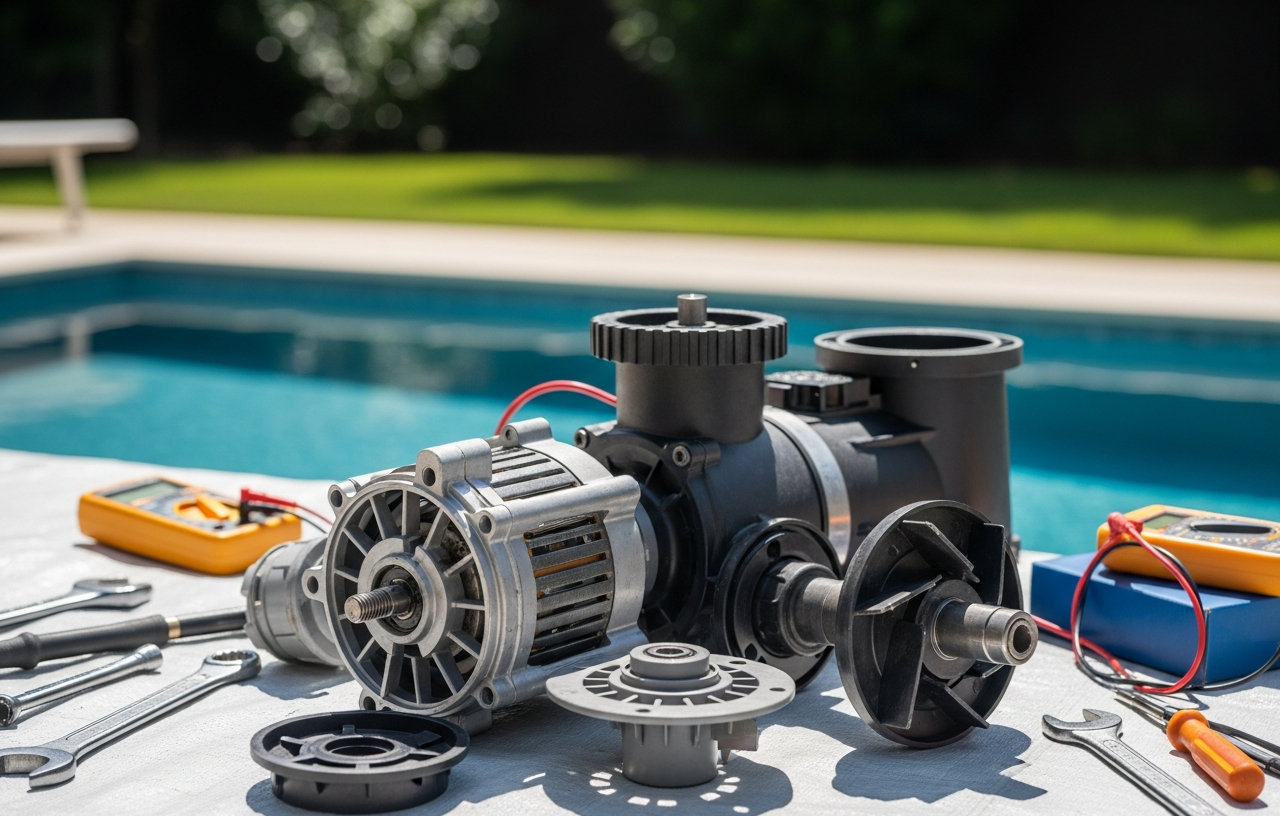
DIY Cost: Replacement bearings cost $20-$60. However, replacing bearings requires significant disassembly of the motor itself, including pulling the rotor. This is a more advanced DIY repair, often taking 2-4 hours, and requires specialized tools like a bearing puller. Many DIYers opt for a complete motor replacement at this point due to the complexity.
Professional Cost: A professional might charge $80-$150 for a service call. Labor for bearing replacement can be 2-3 hours at $75-$150 per hour. Total cost could be $230-$600. Many technicians will recommend replacing the entire motor instead, which can be more cost effective in the long run.
Complete Motor Failure
Symptom: The pump does not turn on at all, or it trips the circuit breaker immediately. There might be a burning smell. This indicates a severe electrical problem within the motor windings or internal components.
DIY Cost: A replacement pool pump motor costs $200-$500, depending on horsepower and brand. Installing a new motor involves disconnecting all wiring, unbolting the old motor, and attaching the new one to the wet end. This takes 2-3 hours. A multimeter can help diagnose electrical issues, making sure the problem is indeed the motor.
Professional Cost: The pool pump motor replacement cost is significantly higher with a professional. The service call is $80-$150. Labor for a motor swap can be 2-3 hours at $75-$150 per hour. With the motor part costing $200-$500, the total cost of replacing a pool pump motor professionally ranges from $400-$800.
When to Repair vs. Replace the Entire Pump
Deciding between repair and full replacement depends on several factors:
-
Age of the Pump: If your pump is less than 5 years old, repairing a single component is usually the most economical option. For pumps 8-10 years old or older, especially if multiple components are failing, a full replacement may be wiser. Older pumps often become less efficient, costing more in electricity.
-
Cost of Repair vs. New Pump: If the repair cost, even with professional labor, is less than half the price of a new pump, repair is generally recommended. If the cost approaches or exceeds 50-70% of a new pump, consider a replacement. For example, the cost of replacing a pool pump motor can be substantial, making a new, more efficient pump a better long term investment.
-
Energy Efficiency: Older single-speed pumps consume a lot of electricity. Replacing an old pump with a new variable-speed model can offer significant long term energy savings, sometimes offsetting the initial purchase cost within a few years.
-
Warranty: Check if your pump or a newly installed component is still under warranty. This can reduce or eliminate repair costs.
Pool Heat Pump Repair Costs
A pool heat pump operates differently than a standard circulation pump. Its function is to heat your pool water, not just move it. Therefore, pool heat pump repair involves different components and often requires specialized knowledge.
Common Pool Heat Pump Issues:
-
Fan Motor Problems: If the fan is not spinning, or is making excessive noise, it can prevent the heat pump from extracting heat from the air. A replacement fan motor can cost $200-$400 for the part. Professional repair for a fan motor usually costs $300-$700, including parts and labor.
-
Refrigerant Leaks: A drop in heating performance or visible ice on the coils can indicate a refrigerant leak. This requires a certified HVAC technician. Detecting and repairing a leak, then recharging the refrigerant, typically costs $200-$600. The cost depends on the severity and location of the leak.
-
Compressor Failure: The compressor is the heart of the heat pump. If it fails, the unit will not heat at all. Compressor replacement is a major repair, often costing $800-$2000 or more. At this point, many homeowners consider replacing the entire pool heat pump, especially if the unit is older. This is similar to a pool heater not working scenario with traditional gas or electric heaters, but with specific heat pump components.
-
Control Board Issues: Electronic control boards can fail, leading to erratic operation or complete shutdown. A replacement board costs $150-$500 for the part. Professional installation adds $150-$300 in labor and service call fees, bringing the total to $300-$800.
For complex swimming pool heat pump repair, seeking a qualified technician is almost always recommended. Diagnosing refrigerant issues or electrical faults within a heat pump requires specialized tools and expertise. Trying to fix these yourself can be dangerous and cause more damage.
Finding a Pool Pump Repair Service Near Me
When searching for 'pool pump repair near me', consider these points:
-
Check Credentials: Look for technicians certified by reputable organizations or manufacturers. Experience with various pump brands is a plus.
-
Get Multiple Quotes: Obtain at least two or three quotes for the repair. This helps you compare pricing and ensure you are getting a fair deal. Ask for a breakdown of parts and labor costs.
-
Read Reviews: Online reviews on platforms like Google, Yelp, or local community forums can offer insights into a technician's reliability and quality of work.
-
Warranty on Work: Inquire about warranties on both parts and labor. A reputable service provider will stand behind their work for a reasonable period.
DIY Considerations for Pool Pump Repair
Before attempting a DIY repair, consider your comfort level with electrical work and basic plumbing. Always turn off power to the pump at the circuit breaker before beginning any work. A multimeter is a useful tool for diagnosing electrical issues like a faulty capacitor or checking for continuity in motor windings.
Benefits of DIY:
-
Significant Savings: You save on service call fees and labor costs, which can be hundreds of dollars.
-
Immediate Fix: If you have the part on hand, you can often fix the pump faster than waiting for a technician.
-
Learning Experience: You gain a better understanding of your pool equipment.
Drawbacks of DIY:
-
Risk of Error: Incorrect installation can lead to new leaks, electrical hazards, or further damage to the pump.
-
Time and Effort: Some repairs are complex and time consuming, requiring specific tools.
-
Lack of Warranty: DIY repairs typically do not come with a warranty on the labor, only on the part itself.
For simple tasks like replacing a capacitor or a shaft seal, many homeowners find DIY to be a rewarding and cost effective solution. More complex issues, particularly those involving the motor's internal components or a swimming pool heat pump repair, often warrant professional assistance.