
35,000 BTU Swimming Pool Heater 12 COP Electric Pool Heat Pump for Above Ground and Inground Pools Heating and Cooling Smart WiFi
- High BTU Powerful Heating, Energy-Saving & Safe: The Vidapool pool heat pump delivers up to 35,000 BTU and.
- Advanced Technology, Efficient and Worry-Free: Equipped with multiple patented heat exchange technologies.
- Smart Control, Quiet Operation: Smart technology brings convenience to your life. Operating noise is as.
- Easy Installation, Year-Round Comfort: Features 3 flexible connection options for perfect compatibility.

Aquastrong 80,000 BTU Top Discharge Inverter Swimming Pool Heat Pump, Electric Pool Heater for Above Ground and Inground Pool,
- Upgraded Top Air Flow Design: Aquastrong Top Discharge pool heat pump efficiently covers the heating needs.
- High-Power Performance: Featuring an upgraded titanium heat exchanger, this swimming pool heat pump is.
- Eco Inverter Performance: Featuring advanced full inverter technology, the Aquastrong Top Discharge pool.
- Quieter Pool, Better Living: This pool heater delivers stronger heating power and hassle-free.

AQUASTRONG Inverter Swimming Pool Heat Pump,Pool Heater for Above Ground and Inground Pool Heating Smart WiFi Control and Cooling
- Extend Your Swim Season: The pool heat pump features a dual-mode heating and cooling system that maintains.
- Rapid Heating & APP Control: Engineered for speed and efficiency, it delivers 35,000 BTU warmth in hours.
- Inverter Energy Saving: Intelligent heat pump system featuring full DC variable frequency technology.
- Ultra-Quiet & Auto-Defrost: Variable frequency technology reduces operational noise to just 48 dB, paired.
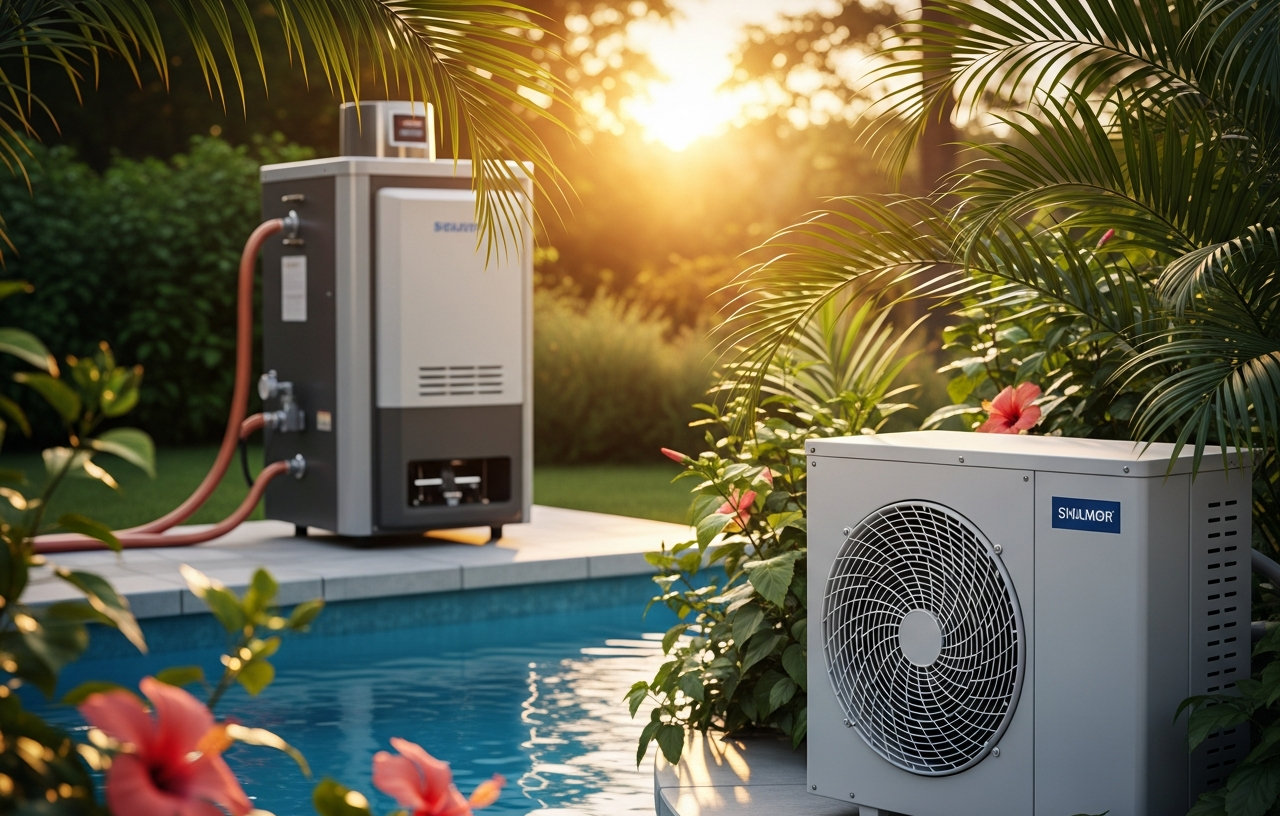
For extending your swim season with energy efficiency and smart control, the Vidapool 35,000 BTU Electric Pool Heat Pump stands out as the top choice. This advanced unit offers powerful heating and cooling capabilities, quiet operation, and smart WiFi control, making it a superior option for many pool owners compared to traditional gas heaters. When faced with the decision of a new pool heating system, homeowners often consider two primary types: gas pool heaters and electric pool heat pumps. Each system has distinct advantages and disadvantages regarding initial cost, operating expense, heating speed, and environmental impact. Understanding these differences helps you select the best fit for your specific needs, whether you have an above-ground or inground pool.
Understanding Pool Heating: Gas Heaters vs. Heat Pumps
The choice between an electric pool heater vs gas pool heater often comes down to how each system generates heat and its associated costs. Gas pool heaters, also known as natural gas or propane heaters, burn fuel to directly heat the water as it passes through a combustion chamber. They are known for their rapid heating capabilities, making them ideal for quickly warming a pool on demand, even in cooler weather. However, their operating costs can be high, especially with fluctuating fuel prices.
An electric pool heat pump, on the other hand, operates more like an air conditioner in reverse. It draws heat from the ambient air, amplifies it, and transfers it to the pool water. This process is highly energy-efficient because it moves existing heat rather than generating it. Heat pumps are slower to heat a pool initially, but they maintain temperature very efficiently and typically have lower operating costs. The performance of an electric pool heat pump depends heavily on air temperature, making it most effective in climates where ambient temperatures stay above 50 degrees Fahrenheit (10 degrees Celsius).
Pool Heater vs. Heat Pump: Side-by-Side Comparison
Comparing a gas heater vs heat pump for swimming pool use reveals distinct differences in several key areas. This table provides a quick overview of how these systems stack up.
| Feature | Gas Heater (General) | Vidapool 35,000 BTU Electric Pool Heat Pump (Top Pick) | Aquastrong 80,000 BTU Top Discharge Inverter Heat Pump | AQUASTRONG Inverter 35,000 BTU Heat Pump |
|---|---|---|---|---|
| Energy Source | Natural Gas or Propane | Electricity | Electricity | Electricity |
| BTU Output | 125,000 - 400,000+ | 35,000 BTU | 80,000 BTU | 35,000 BTU |
| COP (Coefficient of Performance) | N/A (Efficiency measured in % up to 85-95%) | 12 (High Efficiency) | High, due to inverter technology | High, due to inverter technology |
| Installation | Requires gas line, venting, electrical connection. Professional installation recommended. Labor costs for installation can range from $500-$2,000, not including gas line work. | Requires dedicated electrical circuit, plumbing connection. Easier DIY for some, but electrical work often needs a pro. An electrician's service call might cost $80-$150. | Requires dedicated electrical circuit, plumbing connection. Professional electrical connection recommended. | Requires dedicated electrical circuit, plumbing connection. Professional electrical connection recommended. |
| Operating Cost | High, depends on gas prices and usage | Low to Moderate, depends on electricity rates and ambient temperature | Low to Moderate, highly efficient due to inverter | Low to Moderate, highly efficient due to inverter |
| Heating Speed | Very Fast | Moderate to Slow | Moderate (faster than fixed-speed heat pumps) | Moderate (faster than fixed-speed heat pumps) |
| Climate Suitability | All climates, effective even in cold weather | Best for moderate to warm climates (above 50°F / 10°C) | Good for moderate to cooler climates due to higher BTU and inverter tech | Best for moderate to warm climates (above 50°F / 10°C) |
| Noise Level | Moderate to Loud | Quiet Operation | Quiet at lower speeds, moderate at full power | Quiet Operation |
| Smart Features | Some modern units have digital controls | Smart WiFi Control | Advanced digital controls | Smart WiFi Control, APP Control |
Product Spotlight: Vidapool 35,000 BTU Electric Pool Heat Pump (Top Pick)
The Vidapool 35,000 BTU Swimming Pool Heater 12 COP Electric Pool Heat Pump is a standout option for pool owners seeking an energy-efficient and smart heating solution. This unit is designed for both above-ground and inground pools, offering both heating and cooling functions.
Strengths:
- High BTU and Energy-Saving: The Vidapool delivers up to 35,000 BTU, which is substantial for many residential pools. Its impressive 12 COP (Coefficient of Performance) indicates superior energy efficiency. This means it moves 12 units of heat energy for every 1 unit of electrical energy consumed, resulting in significantly lower operating costs compared to gas heaters.
- Advanced Technology: It incorporates multiple patented heat exchange technologies. These innovations contribute to its high efficiency and reliable performance, ensuring consistent water temperatures.
- Smart Control and Quiet Operation: Smart technology is integrated for convenience, including WiFi control. This allows users to manage their pool temperature remotely. This is especially true when starting from a very cold pool.
- Climate Dependence: Its efficiency decreases in very cold ambient air temperatures, typically below 50 degrees Fahrenheit. This makes it less suitable as a primary heating source in colder climates during off-season months.
Best For:
The Vidapool heat pump is ideal for homeowners with small to medium-sized pools in moderate to warm climates. It suits those who prioritize long term energy savings, quiet operation, and smart home integration. If you want to extend your swimming season comfortably without high fuel bills, the Vidapool offers a compelling solution.
Product Spotlight: Aquastrong 80,000 BTU Top Discharge Inverter Swimming Pool Heat Pump
The Aquastrong 80,000 BTU Top Discharge Inverter Swimming Pool Heat Pump provides a powerful electric heating option for both above-ground and inground pools. Its design and high output address the needs of larger pools or those requiring faster heating from a heat pump.
Strengths:
- Upgraded Top Air Flow Design: The top discharge design allows for more efficient air intake and exhaust, which can improve performance and reduce clearance requirements around the unit. This efficiently covers the heating needs of larger pools.
- High-Power Performance: With 80,000 BTU, this unit offers significantly more heating capacity than standard heat pumps. It features an upgraded titanium heat exchanger, ensuring durability and efficient heat transfer. This makes it a strong contender for those considering a pool heat pump vs gas heater for a larger pool.
- Eco Inverter Performance: Featuring advanced full inverter technology, the Aquastrong Top Discharge pool heat pump adjusts its compressor speed based on heating demand. This optimizes energy use, leading to greater efficiency and quieter operation at lower loads compared to traditional on/off heat pumps.
Weaknesses:
- Larger Footprint: A higher BTU unit generally means a larger physical size, which might require more installation space.
- Potential for Higher Initial Cost: Advanced inverter technology and higher BTU output can translate to a greater upfront investment compared to lower-capacity models.
Best For:
This Aquastrong model is an excellent choice for owners of larger pools or those in slightly cooler climates who still prefer the efficiency of an electric heat pump over a gas heater. Its higher BTU and inverter technology provide a good balance of heating speed and energy savings.
Product Spotlight: AQUASTRONG Inverter Swimming Pool Heat Pump (35,000 BTU)
The AQUASTRONG Inverter Swimming Pool Heat Pump offers a balanced approach to pool heating, combining smart features with energy efficiency for various pool types.
Strengths:
- Extend Your Swim Season: This pool heat pump features a dual-mode heating and cooling system. It maintains your preferred water temperature, allowing for comfortable swimming earlier in the spring and later into the fall.
- Rapid Heating & APP Control: Engineered for speed and efficiency, it delivers 35,000 BTU warmth. The integrated APP control provides convenient remote management of pool temperature settings.
- Inverter Energy Saving: An intelligent heat pump system featuring full DC variable frequency technology optimizes energy consumption. This results in significant savings on electricity bills compared to conventional heating methods.
Weaknesses:
- Similar BTU to Vidapool: While efficient, its 35,000 BTU output is best suited for medium-sized pools. Very large pools may still require a higher BTU unit or a longer heating time.
- Initial Cost: Inverter technology and smart features can increase the initial purchase price compared to basic heat pump models.
Best For:
This AQUASTRONG heat pump suits pool owners who desire a flexible, energy-efficient system with smart control for medium-sized pools. Gas heaters perform consistently regardless of outside air temperature, making them a good choice for colder regions or for pools that need rapid heating on demand. Electric pool heat pumps are most efficient when ambient air temperatures are consistently above 50 degrees Fahrenheit. In cooler climates, an electric pool heater vs gas heater will have a harder time reaching and maintaining desired temperatures, leading to higher electricity consumption.
Pool Size and Usage
Larger pools require more BTU output to heat effectively. While gas heaters can provide very high BTUs, electric heat pumps also come in various capacities, like the 80,000 BTU Aquastrong model. Consider how often you will use your pool. If you only heat it occasionally for weekend use, a gas heater's speed might be appealing despite higher operating costs. For daily use over an extended season, the lower running costs of a heat pump often outweigh its slower initial heating.
Energy Costs
Compare the cost of natural gas or propane in your area against electricity rates. This will directly impact your operating expenses. Generally, electric pool heaters vs gas heaters offer lower running costs in the long term, assuming favorable climate conditions. While a gas heater provides quick heat, its continuous operation can quickly deplete fuel. If your pool heater is not working as expected, evaluating energy costs is often part of the troubleshooting process.
Installation Requirements and Costs
Gas heaters require a gas line connection, which can be expensive to install if one is not already present near the pool equipment pad. They also need proper venting. Electric heat pumps require a dedicated high-voltage electrical circuit. If your existing electrical panel cannot support this, an upgrade could be necessary, adding to installation costs. Always consult with qualified professionals for gas and electrical connections to ensure safety and compliance with local codes. Service calls for these professionals typically range from $80-$150, not including material costs for new lines or panel upgrades.
Maintenance
Both types of heaters require some maintenance. Gas heaters involve checking burner trays and heat exchangers, while heat pumps benefit from clean evaporator coils and proper airflow. If you live in a region with consistent warm temperatures (above 50°F / 10°C) and prioritize energy efficiency, lower operating costs, and environmental considerations, an electric pool heat pump is likely your best option. The Vidapool 35,000 BTU Electric Pool Heat Pump is an excellent choice for its high COP, smart features, and quiet operation, making it suitable for many medium-sized pools. The AQUASTRONG Inverter 35,000 BTU offers similar benefits with dual heating and cooling modes.
For larger pools or those in cooler climates where rapid, on-demand heating is a priority, the Aquastrong 80,000 BTU Top Discharge Inverter Heat Pump provides a powerful electric solution. If your budget allows for higher operating expenses and you need immediate heat regardless of ambient air temperature, a gas heater remains a viable option, particularly for pools in very cold areas or for infrequent, quick heating.
Consider your initial budget, long term operational expenses, and how you intend to use your pool throughout the season. Planning for your pool's heating needs is a significant part of your overall pool maintenance checklist. By carefully evaluating these factors, you can select the heating system that provides the most comfort and value for your home.
35,000 BTU Swimming Pool Heater 12 COP Electric Pool Heat Pump for Above Ground and Inground Pools Heating and Cooling Smart WiFi
- High BTU Powerful Heating, Energy-Saving & Safe: The Vidapool pool heat pump delivers up to 35,000 BTU and.
- Advanced Technology, Efficient and Worry-Free: Equipped with multiple patented heat exchange technologies.
- Smart Control, Quiet Operation: Smart technology brings convenience to your life. Operating noise is as.
- Easy Installation, Year-Round Comfort: Features 3 flexible connection options for perfect compatibility.
Aquastrong 80,000 BTU Top Discharge Inverter Swimming Pool Heat Pump, Electric Pool Heater for Above Ground and Inground Pool,
- Upgraded Top Air Flow Design: Aquastrong Top Discharge pool heat pump efficiently covers the heating needs.
- High-Power Performance: Featuring an upgraded titanium heat exchanger, this swimming pool heat pump is.
- Eco Inverter Performance: Featuring advanced full inverter technology, the Aquastrong Top Discharge pool.
- Quieter Pool, Better Living: This pool heater delivers stronger heating power and hassle-free.
AQUASTRONG Inverter Swimming Pool Heat Pump,Pool Heater for Above Ground and Inground Pool Heating Smart WiFi Control and Cooling
- Extend Your Swim Season: The pool heat pump features a dual-mode heating and cooling system that maintains.
- Rapid Heating & APP Control: Engineered for speed and efficiency, it delivers 35,000 BTU warmth in hours.
- Inverter Energy Saving: Intelligent heat pump system featuring full DC variable frequency technology.
- Ultra-Quiet & Auto-Defrost: Variable frequency technology reduces operational noise to just 48 dB, paired.