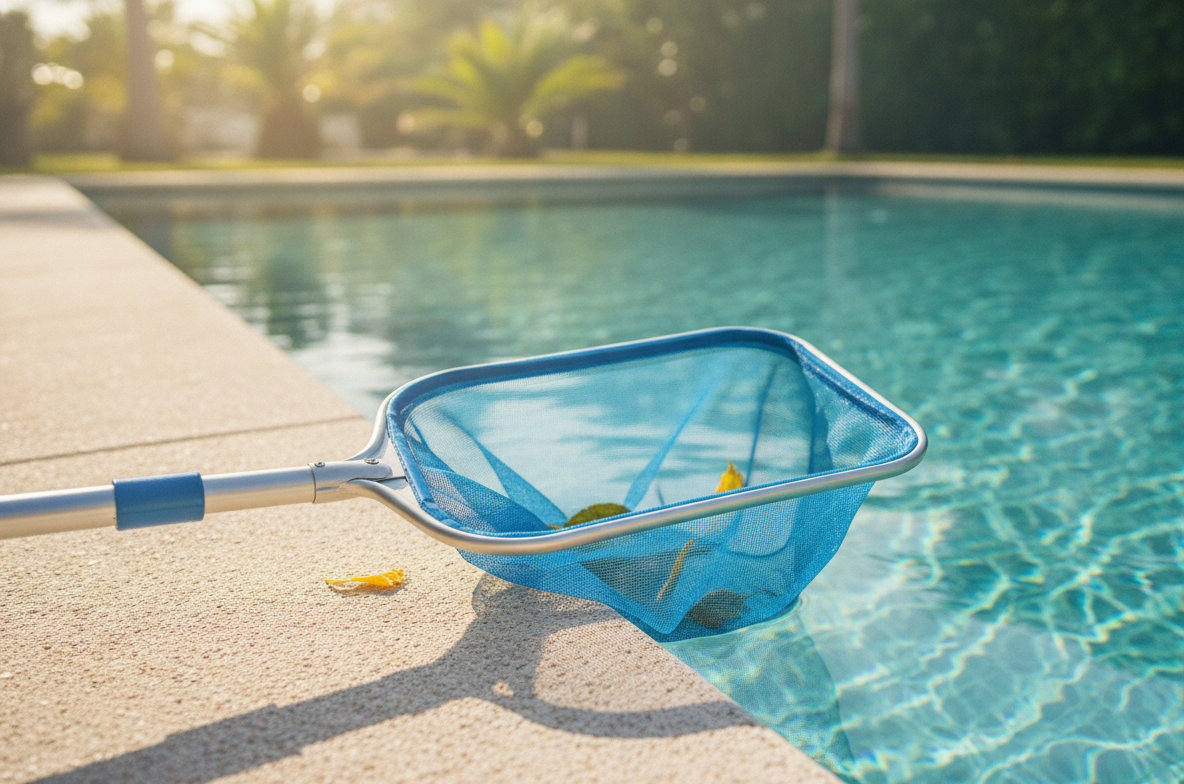
A pool skimmer net is a basic, handheld cleaning device designed to remove floating debris from the surface of a swimming pool. This essential tool consists of a mesh net attached to a frame, which then connects to a telescopic pole. Its primary purpose is to capture leaves, insects, twigs, and other small particles before they sink to the bottom or enter the pool's circulation system, which helps maintain water clarity and prevent equipment strain.
The Essential Role of a Pool Skimmer Net
Regular use of a pool skimmer net is a fundamental part of pool maintenance. Debris left floating on the surface can quickly sink, making it harder to remove. Once debris settles, it requires a pool vacuum or specialized cleaning tools, which are more time consuming.
A pool's built-in skimmer system, located at the waterline, also collects surface debris. However, these systems rely on water flow to draw in particles. A manual skimmer net provides immediate removal of larger concentrations of debris, especially after heavy winds or storms, before the built-in skimmer becomes overwhelmed. This proactive approach reduces the workload on your filter and pump, extending the lifespan of your pool equipment.
Types of Pool Skimmer Nets
There are two primary types of pool skimmer nets, each suited for different cleaning tasks. Both types attach to a standard telescopic pole, which allows for reaching all areas of the pool from the deck.
Flat Leaf Skimmers (Surface Skimmers)
Flat leaf skimmers feature a shallow, flat mesh net. The frame is typically a solid, curved edge, designed to glide smoothly across the water's surface. These nets are ideal for collecting lightweight, floating debris such as:
- Individual leaves
- Insects
- Pollen
- Small twigs
- Wind-blown dust and particles
The flat profile makes them maneuverable and effective for quick daily clean-ups. They are less effective for submerged debris or large quantities of leaves because their shallow bag capacity fills quickly.
Deep-Bag Rakes (Leaf Rakes)
Deep-bag rakes, often called leaf rakes, have a much deeper, cone-shaped or rectangular mesh bag. The frame typically includes a leading edge designed to scoop or 'rake' debris from the pool floor or surface. These nets are designed for more substantial cleaning tasks:
- Large quantities of leaves
- Acorns and other heavy organic matter
- Submerged debris on the pool floor
- Cleaning after heavy storms
The deep bag allows them to hold a significant volume of debris before needing to be emptied. This makes them less efficient for quick surface skimming but indispensable for thorough cleaning. The leading edge on some models can dislodge stubborn debris from the pool bottom.
Understanding Net Mesh and Frame Materials
The effectiveness and durability of a pool skimmer net depend on its mesh material and frame construction. Choosing the right combination enhances cleaning performance and tool longevity.
Mesh Types: Fine vs. Coarse
- Fine Mesh: Nets with a fine mesh weave are excellent for capturing very small particles, such as pollen, fine dust, and even some algae if it is loose in the water. They provide superior water clarity but can experience more drag in the water and may clog faster with larger debris.
- Coarse Mesh: Coarse mesh nets are more robust and allow water to pass through more easily, reducing drag. They are better suited for larger debris like leaves, twigs, and larger insects. While they may miss very fine particles, their quick-drying nature and resistance to tearing make them a popular choice for general cleaning.
Many pool owners use both types, a coarse mesh flat skimmer for daily surface debris and a fine mesh deep-bag rake for thorough weekly cleaning or after a significant debris event.
Frame Materials: Aluminum vs. Plastic
- Plastic Frames: These are lightweight and corrosion-resistant, making them a budget-friendly option. However, plastic frames can become brittle over time due to UV exposure and may crack or snap, especially when scooping heavy, water-logged debris. They are generally suitable for lighter, routine skimming tasks.
- Aluminum Frames: Aluminum frames offer superior strength and durability. They are resistant to bending and breaking, making them suitable for heavy duty use and for raking large quantities of submerged debris. While more expensive, their longevity often justifies the cost. Anodized aluminum frames provide enhanced corrosion resistance against pool chemicals.
How to Effectively Use a Pool Skimmer Net
Proper technique maximizes the efficiency of your pool skimmer net and reduces effort. The goal is to collect debris without stirring it up or pushing it to the bottom.
- Attach to a Telescopic Pole: Make sure the net is securely fastened to a standard pool telescopic pole. Adjust the pole's length to comfortably reach the furthest points of your pool while standing on the deck.
- Skimming the Surface: For floating debris, stand at one end of the pool. Push the flat skimmer net just below the water's surface, moving it slowly across the pool in a long, sweeping motion. Use a gentle, continuous push rather than quick, choppy movements. This prevents debris from escaping the net or sinking. Work your way around the entire perimeter of the pool.
- Collecting Submerged Debris: If using a deep-bag rake, extend the pole to reach the pool floor. Angle the net so its leading edge is slightly raised, then push it along the bottom. This 'raking' motion helps scoop up sunken leaves or other items. Be careful not to scrape the pool liner or plaster.
- Emptying the Net: Periodically lift the net out of the water and empty the collected debris into a trash can or compost bin. Rinse the net briefly with a garden hose to remove any clinging particles before resuming skimming.
- Working with Wind: If it's windy, start skimming from the windward side of the pool. This allows you to catch debris as it blows across the surface before it can accumulate against the opposite wall or sink.
Remember that a clean pool surface reduces the load on your built-in skimmer system. If your pool skimmer is not working correctly, excessive surface debris can exacerbate the problem.
Maintenance and Care for Your Skimmer Net
A little care helps your pool skimmer net last longer and perform better.
- Rinse After Each Use: Always rinse your net thoroughly with fresh water after each cleaning session. This removes chlorine, dirt, and any organic residues that could degrade the mesh over time.
- Inspect for Damage: Regularly check the mesh for tears or holes. Small holes can be patched with specialty repair kits, but a large tear often means it is time for a replacement. Inspect the frame for cracks or bends, especially if it is plastic.
- Proper Storage: Store the skimmer net in a shaded, dry area when not in use. Prolonged exposure to direct sunlight and harsh weather can cause plastic frames to become brittle and mesh to weaken. Hanging the net prevents the mesh from getting crushed or deformed.
- Handle with Care: Avoid using the net to scrape rough surfaces or to lift excessively heavy items, which can strain the frame and tear the mesh.
A well maintained skimmer net is a low-cost, high-impact tool for pool cleanliness.
Beyond the Net: Skimmer Baskets and Automated Systems
Many pools have built-in skimmer baskets designed to trap larger debris before it reaches the pump and filter. These baskets are located within the pool's permanent skimmer opening at the waterline. Regularly emptying these baskets is just as important as manual skimming.
Automated pool cleaners, such as robotic pool cleaners, suction-side cleaners, and pressure-side cleaners, also contribute to debris removal. These devices can clean the pool floor and sometimes walls, offering a more hands-off approach. However, even with automated systems, a manual skimmer net remains the quickest way to remove new surface debris before it sinks or clogs an automated cleaner.
The Impact of Debris on Pool Health
Ignoring surface debris has consequences that extend beyond aesthetics.
Water Chemistry Imbalance
Organic debris, such as leaves, grass clippings, and insects, decomposes in pool water. This decomposition process consumes chlorine, reducing its effectiveness as a sanitizer. It also introduces phosphates and nitrates, which are primary food sources for algae. As chlorine levels drop and nutrients rise, the pool becomes more susceptible to algae blooms and bacterial growth. This can lead to issues like cloudy water or changes in pH. For instance, decaying organic matter often lowers the pool's pH. If your pH is consistently low, you might need to adjust it using specific chemicals. Understanding how to lower pool pH is important, but preventing the cause through debris removal is even better.
Filter and Pump Strain
When debris enters the pool's circulation system through the main skimmer or drain, it places increased strain on the pump and filter. Large pieces of debris can clog the skimmer basket, pump basket, or even the filter itself. A clogged system reduces water flow, forcing the pump to work harder to maintain circulation. This can lead to:
- Reduced pump efficiency: Higher energy consumption and potential for overheating.
- Increased filter pressure: Requiring more frequent backwashing or cartridge cleaning.
- Premature wear and tear: Components like pump seals and impellers can fail faster due to constant strain.
Addressing these issues can involve professional service, with a typical service call costing $80-$150, plus parts and labor for repairs. Regularly using a skimmer net prevents many of these problems, costing nothing beyond the initial purchase of the net.
When to Call a Pool Professional (and When Not To)
Using a pool skimmer net is a fundamental DIY task. It requires no specialized skills or tools beyond the net and a telescopic pole. There is no scenario where calling a pool professional for skimmer net usage is necessary or cost effective. Pool service technicians typically charge $80 to $150 for a service call, plus hourly rates, for tasks like diagnosing pump issues or performing complex chemical adjustments.
You should consider calling a pool professional for issues beyond routine cleaning, such as persistent water chemistry problems that you cannot resolve, equipment malfunctions like a pool pump not priming, or major leaks. However, for surface debris removal, your skimmer net is the most efficient and economical solution.
Conclusion
A pool skimmer net is an indispensable tool for any pool owner. Its simple design belies its critical role in maintaining water quality, preventing equipment damage, and reducing overall maintenance effort. By understanding the different types of nets, employing proper skimming techniques, and providing basic care, you can effectively keep your pool free of surface debris. Regular use of a skimmer net contributes significantly to a clean, healthy, and inviting swimming environment, saving time and money on potential repairs in the long run.